



Blog
Compact SUV Import from USA to Poland: Complete Guide
cars at live US auctions right now
Bid yourself or buy instantly — delivery and customs included in the calculator
You've found a clean-looking compact SUV on Copart or IAAI, and the auction price seems far below what a similar car costs in Poland. That's where many import plans go wrong. The winning bid is only the beginning. Transport, auction fees, customs, VAT, excise tax, repairs, headlight conversion, inspection, and delivery can change the calculation completely.
A compact SUV can still be an excellent US import for a Polish buyer, especially when the model has strong European demand and the damage is documented and repairable. The practical approach is to judge the vehicle by its full landed cost, not by the auction screen alone.
Table of Contents
- What makes a compact SUV the smartest US import choice
- Market trends and why compact SUVs dominate global demand
- Top compact SUV models available at US auctions and their profiles
- Breaking down the full import cost from auction to Polish doorstep
- VIN checks and auction condition evaluation before you bid
- EU compliance and required technical conversions for Polish registration
- Registration steps and resale profitability analysis for Poland
- How DreamBid streamlines every step of your compact SUV import
What makes a compact SUV the smartest US import choice
A Polish buyer usually wants one vehicle to handle commuting, family travel, luggage, winter roads, and occasional longer trips without the size and running costs of a large SUV. That's the role of a compact SUV. There's no single formal universal size definition, so marketing labels can be confusing. A useful class reference is the Toyota RAV4, at approximately 181 inches long, 73 inches wide, and 67 inches high, according to CarGurus' compact SUV dimensions guide.
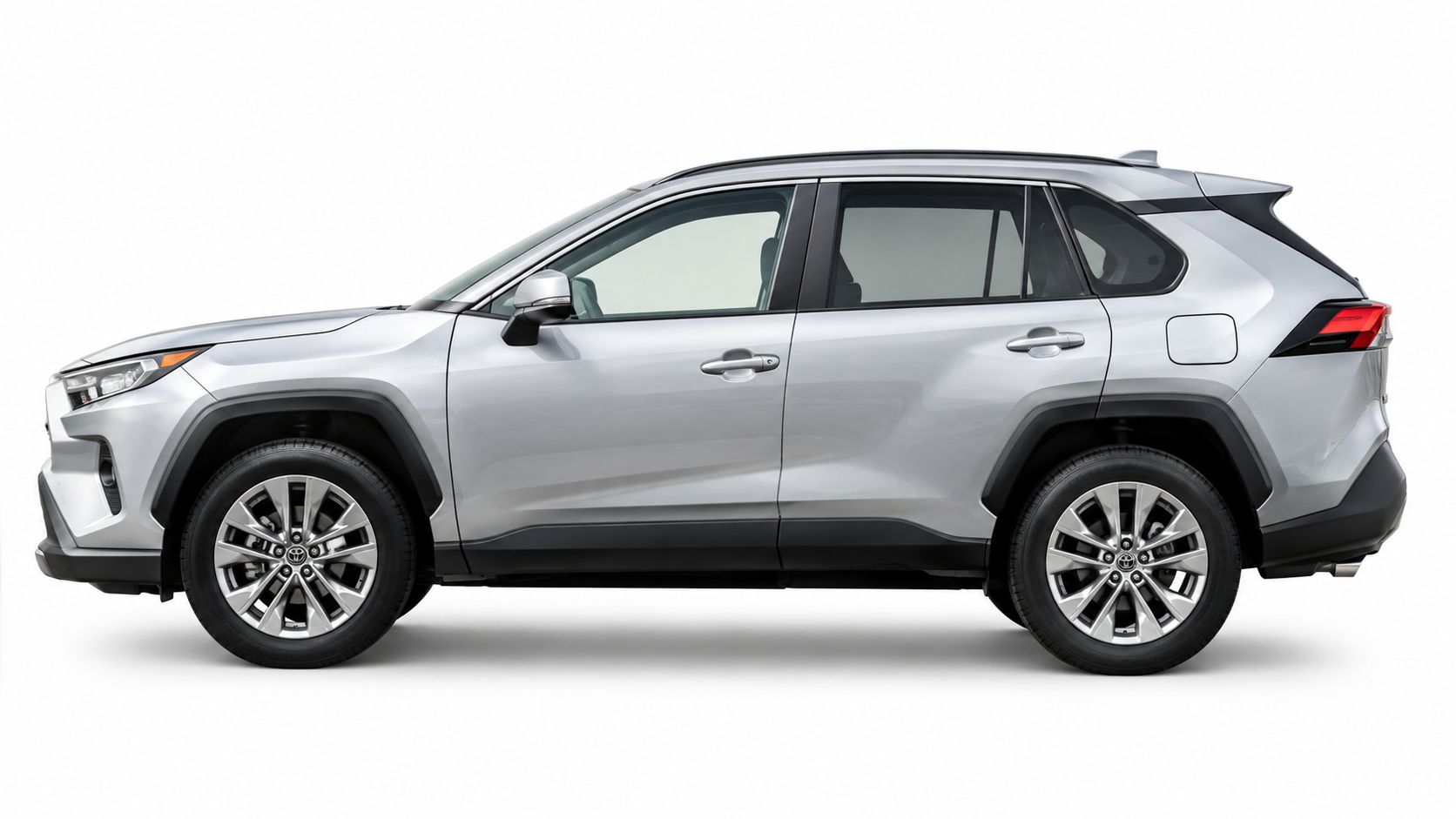
That footprint matters in Poland. The vehicle feels more commanding than a hatchback, but it remains manageable in urban streets, underground parking, and narrow residential access roads. It also gives families a practical rear bench and luggage area without moving into the heavier, less efficient standard SUV class.
Why US auction supply works in this segment
Compact SUVs appear regularly at American auctions in both clean-title and salvage condition. That creates choice. You can look for a lightly damaged insurance vehicle, a hail-damaged example, or a car with cosmetic loss rather than accepting the first listing available.
The segment also has a practical resale advantage. Buyers in Poland and other European markets already understand models such as the Honda CR-V, Toyota RAV4, Mazda CX-5, and Chevrolet Equinox. Familiarity makes servicing, parts sourcing, and eventual resale easier than with an obscure American model.
Engine size deserves attention before you bid. Polish excise tax changes according to whether the engine is below or above 2.0 liters, so a compact SUV with a smaller engine can be easier to position in the total-cost calculation. That doesn't make every smaller engine the right choice. Turbocharged units, hybrid systems, and all-wheel drive can affect repair complexity and parts availability.
Practical rule: Choose the body style first, then judge the exact engine, drivetrain, damage type, and documentation. “Compact SUV” is only the starting category.
For a broader explanation of why buyers consider American vehicles, review the main reasons to import from the USA. The important point is simple. A compact SUV gives you useful space, recognizable resale demand, and a large auction pool, but only a disciplined inspection turns those advantages into a sensible purchase.
Market trends and why compact SUVs dominate global demand
Compact SUVs stopped being a specialist alternative to passenger cars and became a central part of the global market. Edmunds has described the segment as reaching twice the market share it held a decade earlier, a structural change driven by buyers who want a higher seating position, flexible cargo capacity, and an accessible step into SUV ownership. Edmunds' compact SUV analysis documents that long-term shift.
The current market estimates reinforce the same conclusion. One analysis estimates the worldwide compact SUV market at USD 3,126.0 million in 2025, with a projected rise to USD 5,251.8 million by 2033, implying a 6.7 percent CAGR from 2026 through 2033. The same market source cites compact SUVs and crossovers at 32.1 percent of SUV market share in 2025, valued at USD 403.6 billion. These figures are published in the compact SUV market analysis.
What the demand means for an importer
Demand doesn't guarantee profit, but it improves your exit options. A familiar compact SUV can appeal to a private buyer, a family replacing an older car, or an independent dealer searching for a vehicle with broad market recognition.
Separate industry estimates place compact SUVs at approximately 65 percent of the global small SUV market in 2024, while another estimate places them at 42.88 percent of SUV market revenue in 2025. The figures use different market definitions, so they shouldn't be combined as if they measured exactly the same population. They do, however, point in the same direction. Compact SUVs are a major revenue pool, not a niche body style.
European demand is equally important for a Polish buyer. A 2026 market analysis reported compact SUVs at about 21 percent of the European market, which confirms that the format has become part of everyday vehicle buying across the region.
Why auction volume helps
High availability at US auctions gives you more bargaining power than a thinly traded niche model. If one RAV4 has unacceptable structural damage, another listing may offer a better loss type. If a CR-V attracts aggressive bidding, you can switch to a CX-5 or Equinox instead of chasing one car beyond your budget.
That flexibility protects the economics of importing. The best purchase usually isn't the car with the lowest displayed bid. It's the car with a clean damage story, sensible repair requirements, and enough European demand to justify the full cost chain.
Top compact SUV models available at US auctions and their profiles
The four models most relevant to a Polish importer are the Honda CR-V, Toyota RAV4, Mazda CX-5, and Chevrolet Equinox. They don't offer identical ownership profiles. The CR-V and RAV4 generally attract buyers seeking practical family transport and strong recognition. The CX-5 appeals to drivers who value road manners and interior quality. The Equinox can offer an attractive entry point, but its condition and complaint history deserve closer review.
Fuel economy is one of the clearest differences. A 2026 Honda CR-V is rated at 30 mpg combined with front-wheel drive, 29 mpg with all-wheel drive, and 40 mpg combined as a hybrid, according to Kelley Blue Book's CR-V specifications. A 2024 Mazda CX-5 is listed at 28 mpg combined, with a 26 city and 31 highway rating, and a 2,000-pound maximum towing capacity in the cited specification.
| Model | Engine options | Combined MPG | Import appeal |
|---|---|---|---|
| Honda CR-V | Gasoline and hybrid options | 30 FWD, 29 AWD, 40 hybrid | Strong family usability, hybrid efficiency, broad recognition |
| Toyota RAV4 | Gasoline and hybrid options | Verify by exact year and drivetrain | High demand, but auction bidding can be competitive |
| Mazda CX-5 | Gasoline options, including AWD variants | 28 in the cited 2024 specification | Good driving character and useful towing capacity |
| Chevrolet Equinox | Gasoline options by model year | Verify by exact year and configuration | Potentially attractive purchase price, but inspect visibility and electrical systems carefully |
The broader efficiency comparison also favors the segment. For 2024 and 2025 gasoline vehicles, small SUVs averaged 26.1 mpg combined, compared with 19.6 mpg for standard SUVs, a difference of 6.5 mpg, based on the small SUV fuel-cost comparison.
How to choose among them
All-wheel drive usually creates a modest fuel-economy penalty, as the CR-V figures demonstrate. Hybridization can create a much larger efficiency improvement, but the higher purchase price and additional system complexity need to be included in the repair and ownership calculation.
Before bidding, compare the exact model year, engine, drivetrain, title status, and damage location. The SUV ranking from DreamBid can help with initial model research, but the auction listing and VIN history must decide the final bid.
Breaking down the full import cost from auction to Polish doorstep
A compact SUV import should be calculated in layers. The auction price is only the first line. A realistic calculation begins with the maximum bid and adds every cost required to place the vehicle legally at the buyer's address in Poland.
The cost chain
-
Auction purchase and buyer fees. Copart and IAAI add buyer and transaction charges to the winning bid. These depend on the auction, vehicle value, title, and account conditions.
-
US inland transport. A truck moves the vehicle from the salvage yard or auction facility to the export port. Distance, operability, storage status, and vehicle size affect this stage.
-
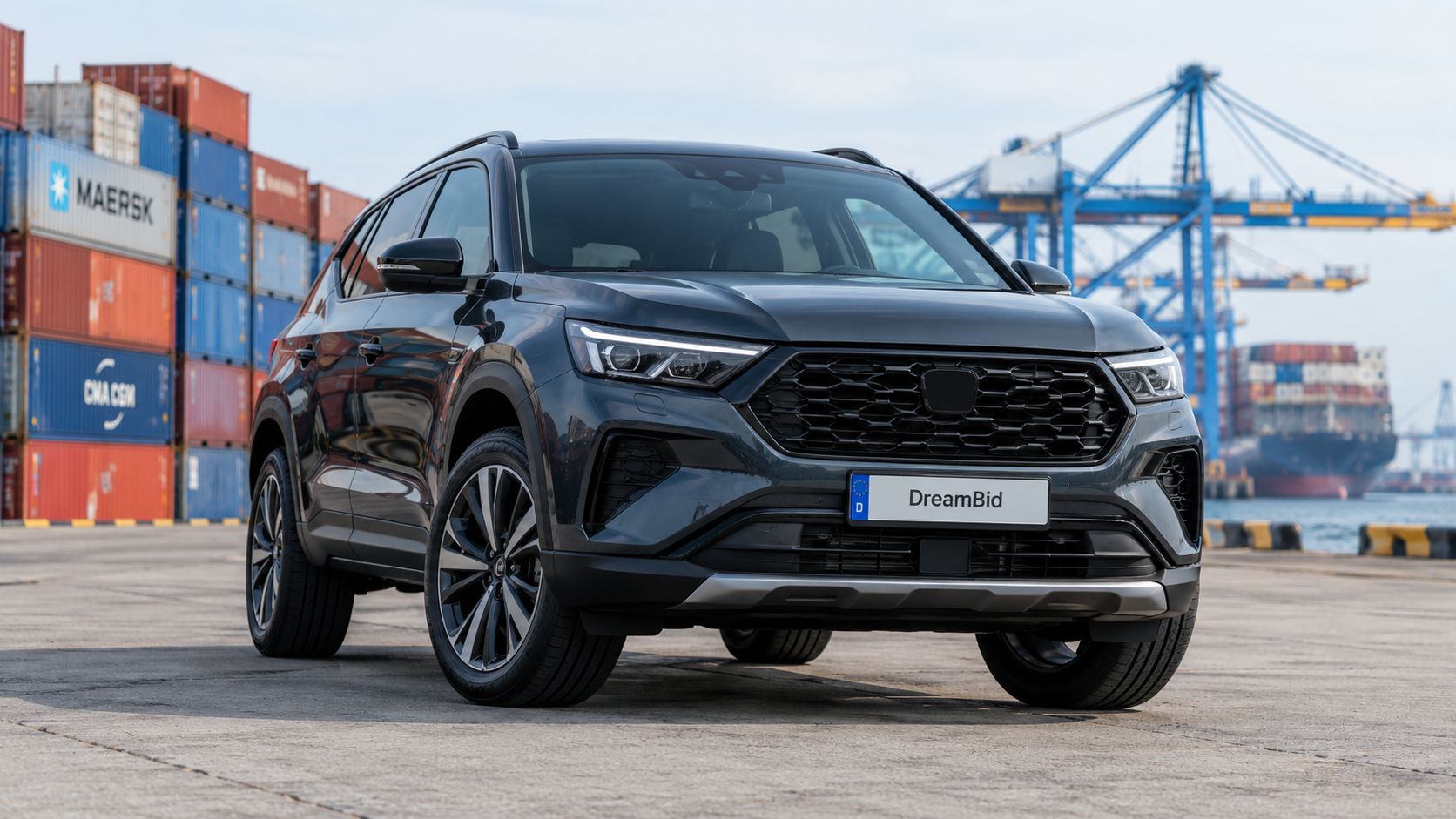
Ocean freight. Container shipping carries the vehicle to Europe. The route, port, container arrangement, and loading requirements all influence the final amount.
-
Customs clearance. You'll need a customs valuation and documentation package. Some imports are routed through Gdynia for domestic processing. Others may use German ports such as Bremerhaven, where specific VAT arrangements can make the routing more suitable depending on the buyer's situation and transaction structure.
-
Duty and VAT. Customs duty is calculated using the relevant vehicle value and import basis. Polish VAT then applies under the applicable customs structure. The exact result depends on the transaction, documentation, and clearance route, so it must be calculated rather than guessed.
-
Polish excise tax. Akcyza changes sharply for engines below and above 2.0 liters. Engine displacement should be checked before bidding because it can alter the economics of an otherwise similar vehicle.
-
Repair and EU conversion. Bodywork, parts, airbags, lighting, tires, fluids, and diagnostic work belong in the first calculation, not as an afterthought.
-
Final delivery. After clearance and preparation, a regional flatbed transports the compact SUV to the client's doorstep.
DreamBid's fixed service fee is 1,999 PLN net, and the stated model is designed to avoid hidden middleman commissions or unexpected operational markups. The DreamBid import cost calculator is useful because it exposes the complete estimate before a bid is placed.
The right question isn't “How cheap is the auction car?” It's “What will this exact VIN cost after transport, tax, repair, compliance, and delivery?”
VIN checks and auction condition evaluation before you bid
Auction photos show what the seller wants you to see. The VIN history and damage documentation often reveal what the images don't. Start by decoding the VIN for the manufacturer, model information, model year, and production details, then compare the auction record with Carfax or AutoCheck where available.
Look for title branding, repeated ownership events, mileage inconsistencies, previous accident entries, flood indicators, and gaps in the history. A clean title doesn't guarantee an undamaged vehicle, and a salvage title doesn't automatically mean the car is beyond repair. The damage pattern, documentation, and parts availability matter more than the label alone.
What the auction images should tell you
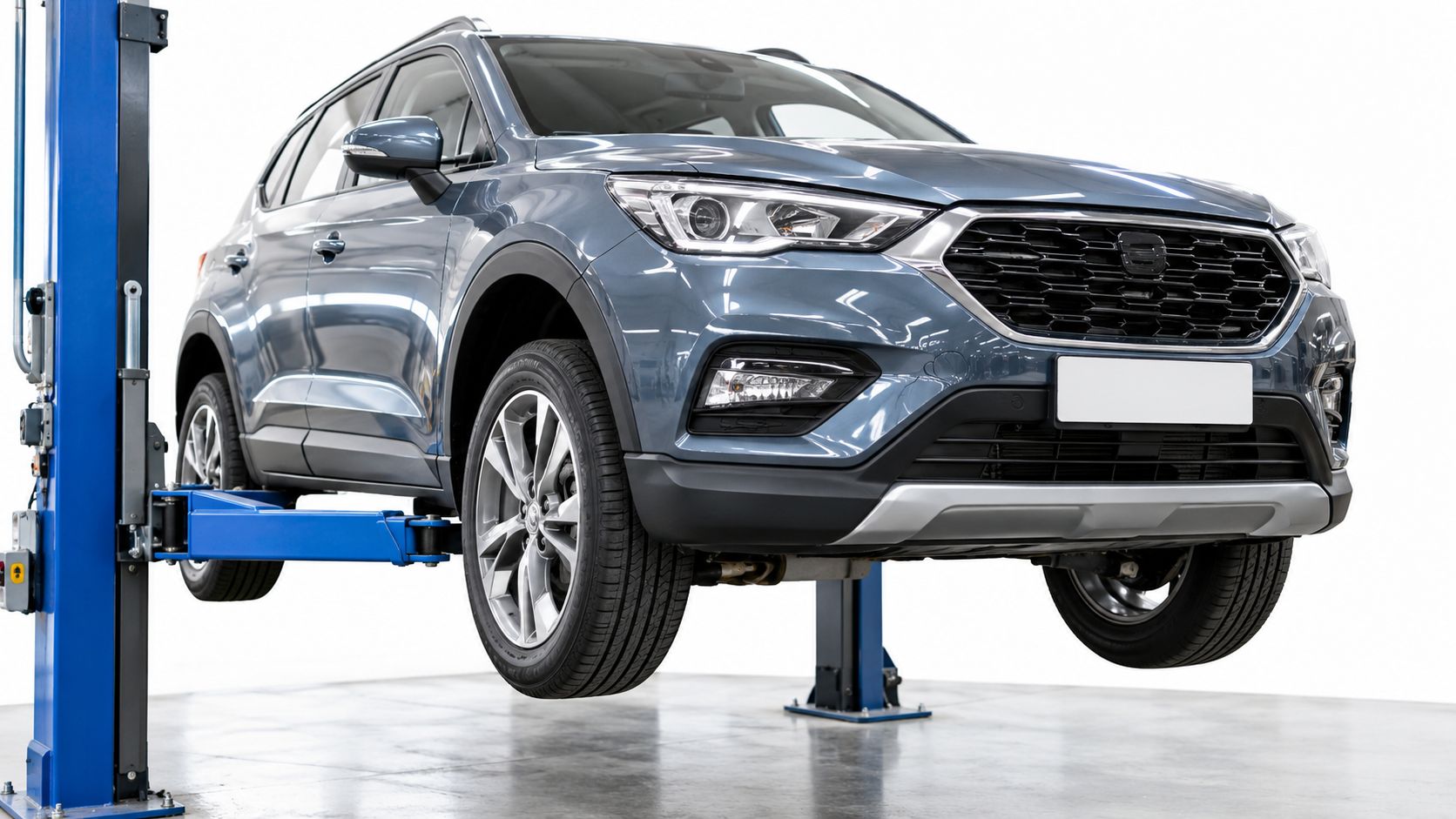
Study panel gaps, wheel position, suspension height, windshield alignment, and the relationship between the hood, fenders, doors, and roof. A front bumper replacement is a different project from a rail, apron, firewall, or suspension-tower impact.
Flag these warning signs:
- Structural movement: Uneven gaps, buckled rails, displaced wheels, and roof or pillar distortion can turn a visual repair into a major reconstruction.
- Flood exposure: Mud in hidden cavities, corrosion on connectors, water lines, damp carpeting, and inconsistent electrical operation should stop the bid until the history is clear.
- Airbag deployment: Check the steering wheel, dashboard, seats, curtains, and restraint modules. Missing airbags can make the repair budget rise quickly.
- Missing components: Auction images may show absent grilles, lights, radiators, cooling packs, sensors, or interior trim that aren't obvious in the main photo.
- Seller type: Insurance-source vehicles with documented histories are easier to evaluate than private reseller listings with incomplete context.
Safety and daily-use risk
A compact SUV isn't automatically safe because it sits higher than a car. In an updated whiplash-prevention test, only 4 of the first 18 compact SUVs tested earned a Good rating, according to reporting on IIHS small SUV safety testing. A 2024 IIHS side-impact update also found that 9 of 15 small SUVs received the lowest Poor rating in the new rear-seat protection test.
Reliability complaints deserve the same attention as crash results. Independent complaint data for the 2025 Chevrolet Equinox records 288 owner complaints, including 88 involving wiper and visibility defects and 49 involving electrical-system failures. These figures don't prove that every Equinox has those problems, but they do justify checking visibility systems, wipers, cameras, sensors, and electronics before purchase.
Use DreamBid's VIN decoder as one part of the review, not as a substitute for auction photos, history reports, and an inspection plan.
EU compliance and required technical conversions for Polish registration
A US-market compact SUV is built for American regulations and road geometry. Poland uses European requirements, so a car that runs and drives at the auction may still need significant technical work before registration.
Headlights are the most common visible conversion. US-spec lamps use a beam pattern designed for right-hand traffic and American road conditions. European roads require the correct light distribution, adjustment range, and approval markings. Depending on the model, the solution may involve replacement European units, approved conversion work, or compatible lighting assemblies. This isn't a cosmetic upgrade. Incorrect beams can create glare and cause the vehicle to fail inspection.
Emissions and equipment checks
Confirm the engine and emissions specification before bidding. Euro compliance affects registration eligibility, and newer US vehicles are more likely to meet the relevant requirements, but you shouldn't assume compliance from the model name alone. Verify the exact engine, model year, emissions label, and available documentation.
Other areas may require attention:
- Rear lighting: US indicators and lamp configurations may not match European requirements.
- Rear fog lamp: A suitable rear fog-light arrangement may be necessary.
- Speedometer display: The vehicle should provide a clear kilometers-per-hour reading.
- Glass and markings: Check whether glazing and safety markings are accepted for the intended registration route.
- Tires and wheels: Confirm load ratings, condition, and suitability for European inspection.
Choosing the customs route
Gdynia can be practical for domestic customs processing and coordination with Polish documentation. Bremerhaven may be appropriate for specific VAT arrangements and logistics structures. The right route depends on ownership, VAT status, paperwork, and where the vehicle will ultimately be registered. A customs agent should confirm the structure before shipment, not after the vehicle arrives.
After customs release, arrange the technical inspection, pay the required taxes, purchase insurance, and prepare the registration documents. Keep the title, customs release document, purchase records, translation documents, and technical certificates together.
Keys also deserve planning. If a vehicle arrives with a missing or damaged key, compare dealer vs locksmith for Jeep keys before assuming the dealer is the only solution. The available option depends on the model, immobilizer system, and proof of ownership.
Registration steps and resale profitability analysis for Poland
Once the compact SUV clears customs and receives its required technical conversions, the registration process becomes a document-control exercise. Missing one paper can delay the entire process, so prepare the file before booking the inspection.
The registration sequence
- Arrange the required translation of foreign documents where applicable.
- Take the vehicle to an authorized technical testing station.
- Submit the customs release documentation and proof that applicable taxes have been paid.
- Purchase Polish third-party liability insurance.
- Apply at the local vehicle registration office with the title, purchase documents, customs records, inspection result, insurance, and identification documents.
The exact paperwork can vary with the vehicle's title status and import route. Ask the customs agent or registration office to confirm the current document list for your case.
Profitability depends on buying discipline. US auction sourcing typically offers a 20 to 40 percent cost advantage compared with purchasing an identical model on the European domestic used market, even after transport, customs, and repair costs, according to DreamBid's stated market positioning. That figure is a planning benchmark, not a guaranteed margin. Auction bidding, hidden damage, parts prices, exchange rates, and repair quality can erase the advantage.
Margin usually comes from the damage decision, not from bravely bidding higher.
The most workable resale candidates tend to have minor front-end collision damage, complete documentation, and a clear insurance history. Vehicles with flood exposure, severe structural movement, missing interiors, or inconsistent mileage may appear inexpensive but create uncertain repair bills and weaker buyer confidence.
For a private buyer, the calculation is simple: compare the full imported cost with the value of a properly repaired and registered equivalent in Poland. For a dealer, add warranty exposure, storage, financing time, detailing, and the cost of explaining the vehicle's history to the next owner.
How DreamBid streamlines every step of your compact SUV import
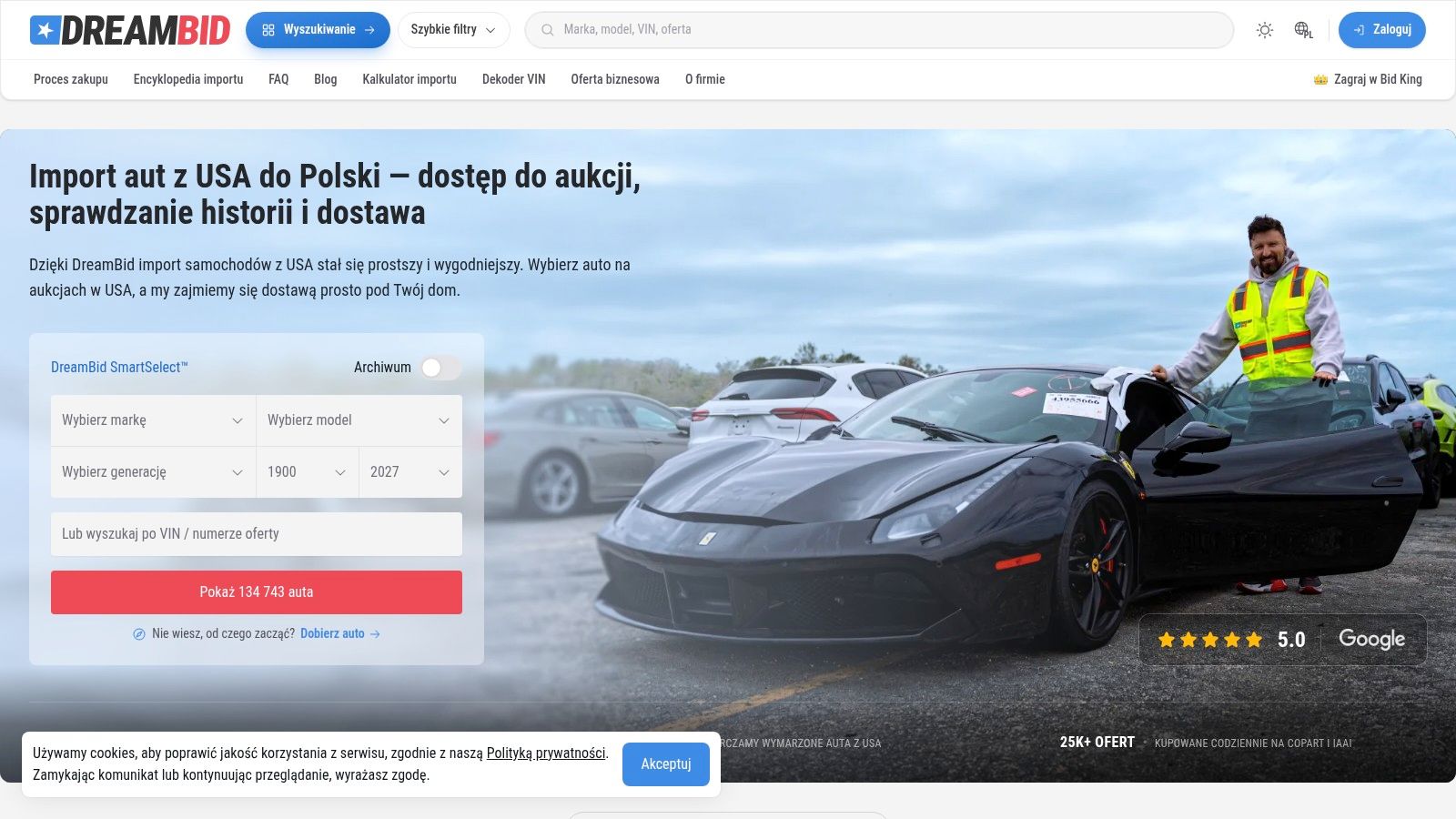
DreamBid combines a 24/7 online auction interface with real-time Copart and IAAI access, VIN analysis, logistics coordination, and an import calculator. That gives the buyer control over vehicle selection while a dedicated import team handles the operational chain.
The company states that it has more than 10 years of import experience and thousands of successfully processed vehicle transactions. Its model uses a fixed service fee of 1,999 PLN net, unchanged by the vehicle's final auction value, with no hidden middleman commission. Milestone updates include high-resolution photos from US export warehouses and status information during transit.
The SmartSelect assistant is intended to help assess structural damage before bidding. That's useful when it supports, rather than replaces, a careful review of VIN records, auction images, title information, and repair availability. The calculator should show auction fees, inland transport, ocean freight, customs, VAT, excise tax, and final delivery before you commit funds.
The practical benefit is predictability. You can reject a vehicle before bidding when the landed cost no longer works, rather than discovering the problem after shipping.
Use DreamBid to search US auction compact SUVs, review VIN and damage information, and calculate the full import chain before bidding. Start with your target engine, drivetrain, and repair budget, then choose only vehicles whose documented total cost still makes sense for registration and ownership in Poland.