



Blog
Premium Cars from US Auctions to Poland Explained
cars at live US auctions right now
Bid yourself or buy instantly — delivery and customs included in the calculator
Meta description: Learn how premium cars from US auctions can make sense for Poland. See where savings come from, what taxes change, and how to avoid bad buys.
You're probably doing the same comparison most buyers do.
You check a Polish listing for a BMW X5, Mercedes GLE, Audi Q7, Porsche Cayenne, or Tesla Model Y. The car looks right. The spec is average. The price is still high. Then you open Copart or IAAI and see what looks like the same class of car in the US for far less. That's the moment when the idea starts to feel real, and also risky.
The question isn't whether premium cars from the US are cheaper at the hammer price. They often are. The question is whether they still make sense after transport, customs, VAT, excise, repair, adaptation, and registration in Poland. If you calculate that chain properly, some premium SUVs and selected EVs still create 20 to 40% arbitrage versus buying the same class of car locally. If you calculate it badly, you import a problem.
Table of Contents
- Why premium cars from the US are suddenly within reach
- What actually makes a car premium
- The market opportunity behind importing premium cars to Poland
- Most profitable premium segments and models to source from Copart and IAAI
- True cost of importing a premium car and how taxes change the math
- How to avoid costly mistakes when buying premium cars at auction
- Your predictable import checklist with DreamBid from bid to registration
Why premium cars from the US are suddenly within reach
A few years ago, imported premium cars were treated like a niche move for traders only. That view is outdated. Today, the process is far more transparent, and the supply of damaged but repairable US vehicles is deep enough that private buyers and smaller dealers can work with it sensibly.
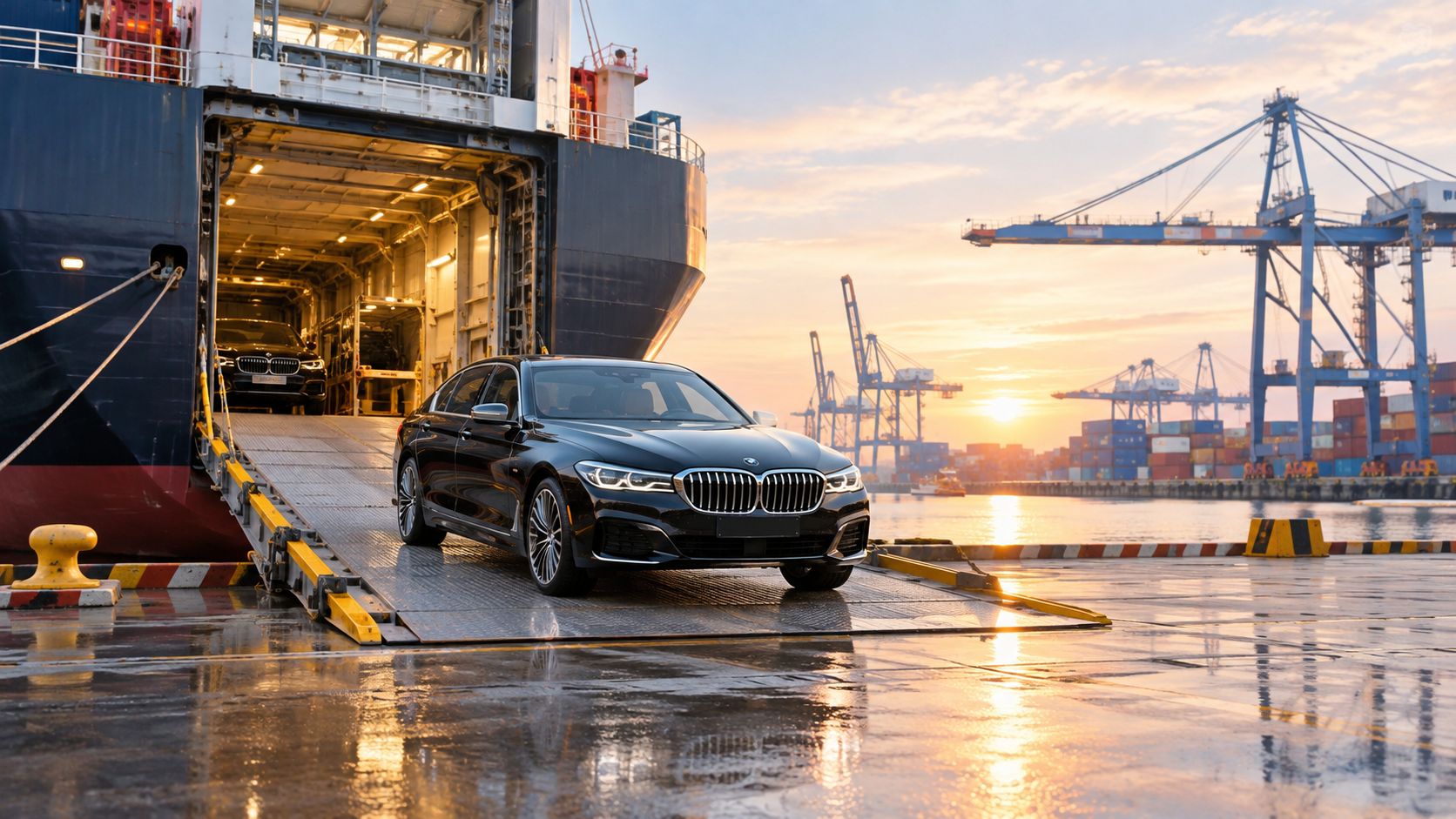
The reason is simple. The US gives buyers access to a broad stream of insurance-loss vehicles, lease returns, and cars with cosmetic or front-end damage that would be priced very differently in Europe. For premium SUVs in particular, that difference is where the opportunity sits.
The gap starts with equipment and supply
A US-market premium car is often easier to find in a strong configuration. Panoramic roof, larger screens, driver assistance, comfort seats, upgraded audio, larger wheels. In Europe, buyers often pay a steep premium for the same options because local inventory is tighter and cleaner cars are priced accordingly.
At the same time, the premium segment itself is large. One industry estimate values the global luxury car market at about USD 603.29 billion in 2026 and projects USD 817.94 billion by 2031, with a 6.28% CAGR. The same report says SUVs held 55.78% share in 2025, and Asia-Pacific held 42.75% share in 2025 according to GM Insights luxury car market analysis. That matters because it confirms two things buyers can already see on the ground. SUVs dominate the premium market, and premium demand is broad enough to keep cross-border trading liquid.
Why buyers hesitate anyway
The fear is rarely the auction itself. It's the unknown after the auction.
Most mistakes happen here:
- Bid-first thinking: Buyers focus on the auction win and ignore inland transport, ocean freight, customs duty, VAT, excise, parts, labor, and EU adaptation.
- Badge-first thinking: They assume every Mercedes, BMW, Tesla, or Porsche is a good import. It isn't.
- Photo-only judgment: They underestimate hidden structural damage, missing airbags, flood history, or electronic faults.
A premium car becomes affordable when the total landed cost is predictable. Not when the auction thumbnail looks cheap.
That's why the smart approach isn't hunting for prestige. It's working backwards from Polish registration and resale reality. If the numbers survive that test, the car is worth attention.
What actually makes a car premium
A premium car isn't just an expensive badge or a leather dashboard. It's a package of engineering choices that improve comfort, stability, refinement, and perceived quality, often at the cost of more complex repairs and higher parts prices.
That matters when you import, because the same features that make premium cars pleasant to own can also make them expensive to rebuild carelessly.
Engineering matters more than the badge
The easiest way to separate a true premium car from a well-equipped mass-market model is to look at what sits underneath the brochure language.
A real premium model usually combines:
- Aerodynamic work: The body is shaped to cut drag, reduce wind noise, and improve high-speed efficiency.
- NVH control: Engineers spend heavily on reducing noise, vibration, and harshness.
- Material quality: Seats, switches, trim, glazing, insulation, and seals are better.
- Chassis isolation: Suspension tuning aims to remove harsh impacts without making the car feel loose.
- Technology integration: Driver assistance, cameras, lighting systems, and infotainment are usually more advanced, but also more expensive when damaged.
Take aerodynamics. Drag rises with the square of speed, which is why motorway behavior matters so much. In current premium sedans, Cd values around 0.20 to 0.23 are class-leading, with the Mercedes EQS at 0.20, Lucid Air at 0.21, and Audi A6 e-tron around 0.23, as noted in Driven Insights coverage of low-drag cars. For an EV, even a small Cd improvement can help highway range. For an ICE or hybrid, it reduces fuel demand and wind noise.
Quietness is engineered, not advertised
The next marker is cabin isolation. Premium cars feel expensive partly because they're quiet at speed.
One cited example reports that Rolls-Royce uses about 130 kg of acoustic insulation. Quiet benchmark figures in the segment sit in the low 60 dB range at 70 mph, with the Rolls-Royce Phantom at 61 dB and Bentley Flying Spur at 62 dB, according to Automonitor's overview of quiet exotic cabins. That kind of refinement comes from laminated glass, thicker insulation, damping materials, and careful sealing.
Practical rule: If a premium car took a side hit or heavy front hit, don't price it like a simple body repair. Quiet cabins depend on dozens of hidden parts, clips, seals, sensors, and insulation layers.
Why this affects import value
Premium doesn't only raise purchase appeal. It changes economics.
A well-chosen premium SUV can hold buyer interest in Poland because people want the comfort, seating position, equipment, and image. But premium engineering also means more things can go wrong after impact. Adaptive headlights, radar modules, active shutters, air suspension, acoustic glass, and soft-close systems all raise the repair threshold.
That's why two cars with the same visible bumper damage can be completely different buys. One needs paint and a lamp. The other needs modules, brackets, calibration, insulation pieces, and coding work.
When buyers understand premium as an engineering category, not a logo, they make better auction decisions.
The market opportunity behind importing premium cars to Poland
Premium car importing works because this isn't a thin niche. It sits inside a huge global market, a large European used-car ecosystem, and a tax environment that creates real price dispersion between countries and drivetrains.
One 2026 market report placed luxury-vehicle sales at 11.8 million units in 2025, with an average transaction value of about USD 64,400, and valued the market at USD 760 billion in 2025. It projected 16.3 million units by 2031 and an average transaction value of roughly USD 67,300, according to Fortune Business Insights luxury car market data. That scale matters because it means premium cars are traded in volumes large enough to support sourcing, refurbishment, and resale rather than functioning like exotic one-off stock.
Why Europe creates room for arbitrage
On the demand side, Europe's used-car market is enormous. One independent estimate puts annual used-car transactions across the EU27 plus the UK, Switzerland, Norway, and Serbia at 35 to 38 million vehicles. Another 2026 source estimates 54.20 million transactions in 2025 and projects 58.36 million by 2030, according to CarPulse on the European used-car market. A market this deep always creates pricing gaps.
Those gaps matter more in premium cars than in ordinary hatchbacks because equipment differences are wider, tax effects are sharper, and buyers are more sensitive to condition, mileage, and spec.
Premium car market scale that drives import economics
| Market Indicator | 2025-2026 Value | Implication for Importers |
|---|---|---|
| Global luxury vehicle sales | 11.8 million units in 2025 | Liquidity is strong enough for sourcing and resale strategies |
| Average premium transaction value | About USD 64,400 in 2025 | High ticket sizes leave room for meaningful price spreads |
| Global luxury market value | USD 760 billion in 2025 | Premium cars are not a tiny niche category |
| European used-car transactions | 35 to 38 million annually or 54.20 million in 2025 depending on estimate | Large stock volume creates cross-border sourcing opportunities |
| European used-car market projection | 58.36 million by 2030 | Ongoing transaction depth supports resale channels |
Where the 20 to 40% gap usually comes from
The arbitrage doesn't appear by magic. It usually comes from a combination of factors:
- US auction supply: More premium SUVs and EVs reach auction channels than many Polish buyers expect.
- Damage tolerance gap: European retail buyers discount repaired premium cars heavily, but careful importers can buy and rebuild them economically.
- Spec advantage: US cars often arrive with richer option lists.
- Tax distortion: Engine size, VAT route, and registration rules change landed cost significantly by country.
There's another angle worth watching. JD Power reported that premium vehicles accounted for 13.3% of new-vehicle sales in the first half of 2026, down from 13.8% a year earlier, and that 32% of consumers trading a midsize premium SUV switched to a non-luxury brand, as cited by The Charge Port's article discussing EV depreciation and premium share. That doesn't mean premium demand disappears. It means buyers are more selective, and resale works best when the imported car offers visible value against local alternatives.
The best margin usually comes from cars that still feel premium in daily use, but don't force the next buyer to pay for every prestige feature at retail.
Most profitable premium segments and models to source from Copart and IAAI
The profitable part of premium importing isn't the brand list. It's choosing the right segment, the right damage profile, and the right tax exposure.
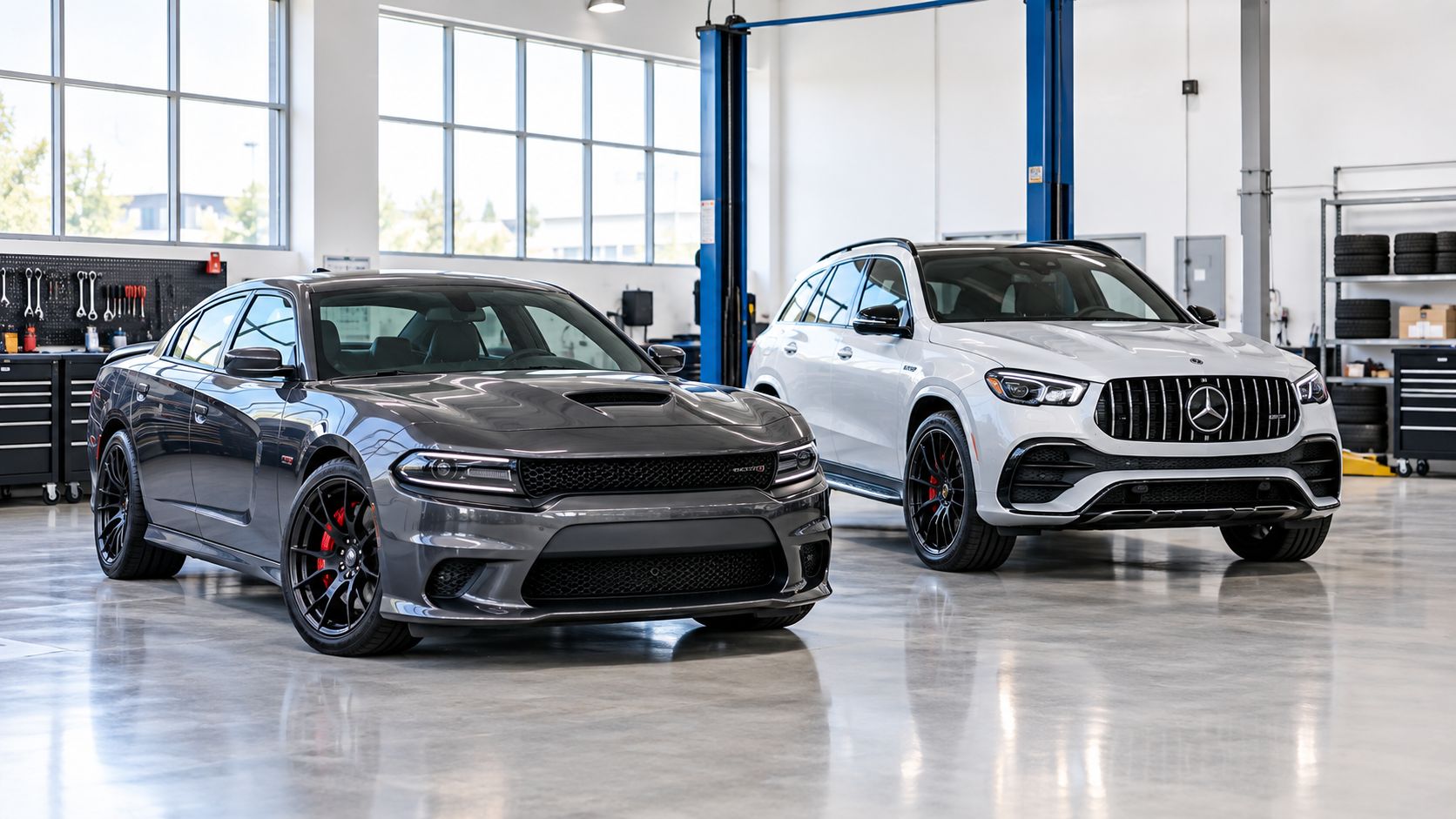
Premium SUVs usually give the cleanest equation
Most Polish buyers should start here. BMW X5, Mercedes GLE, Audi Q7, Porsche Cayenne, Jeep Grand Cherokee in higher trims, and similar models tend to combine broad US supply with strong EU demand.
Why they work:
- They fit buyer preference: SUVs now lead the premium segment globally, which helps resale.
- They absorb repair history better: Buyers often accept repaired SUV inventory more easily than repaired flagship sedans.
- They carry strong specification value: Panoramic roof, cameras, comfort features, and larger infotainment packages matter.
The catch is tax. Many premium SUVs use engines above the lower Polish excise bracket. That doesn't kill the deal, but it changes which trim makes sense.
For buyers comparing this category in more detail, the premium SUV guide on DreamBid is one practical place to study segment fit before bidding.
Sport sedans and coupes reward selectivity
BMW 5 Series, Mercedes E-Class, Audi A6, and similar cars can still work well, especially when the damage is cosmetic or light front-end. They're usually easier to transport and sometimes easier to repair cleanly than large SUVs.
What doesn't work so well is overpaying for a sedan just because the badge looks prestigious. Polish buyers in the used market often want premium comfort, but they also compare body style and utility. An average-spec sedan can lose attention faster than a well-specced SUV.
Performance coupes and muscle cars sit in a separate lane. Ford Mustang is the usual example. It can be profitable, but the buyer pool is narrower and insurance or parts choices can affect the project more sharply.
Premium EVs can look cheap for a reason
Tesla Model Y and some other premium EVs create tempting auction numbers. Sometimes they're good buys. Sometimes they're traps disguised as modern bargains.
The problem isn't only accident damage. It's resale behavior. Luxury EVs lost an average 49.1% of value over three years through 2025, versus 32.4% for luxury gas vehicles, and EVs broadly lost 57.2% over five years in a 2026 study cited by Drive Authority on luxury EV depreciation. If you buy an imported premium EV too high, the depreciation curve can erase your margin before the car even enters the local market properly.
A cheap premium EV can still be expensive if battery uncertainty, charging expectations, and future resale all work against you.
A simple decision matrix
| Segment | Works best for | Main upside | Main risk |
|---|---|---|---|
| Premium SUV | Most private buyers and dealers | Strong resale appeal, rich specs, broad supply | Excise exposure on larger engines |
| Executive sedan | Buyers focused on comfort and road manners | Good value when damage is light | Narrower resale than SUVs |
| Performance coupe or muscle car | Enthusiasts and niche traders | Strong emotional demand | Smaller buyer pool, cosmetic standards are stricter |
| Premium EV | Buyers with charging access and longer hold plans | Modern tech and low running-cost appeal | Fast depreciation and battery-related caution |
True cost of importing a premium car and how taxes change the math
Many buyers either protect their margin or destroy it.
A premium car imported from the US doesn't cost what you bid. It costs the full landed amount after every stage is paid, documented, and cleared.
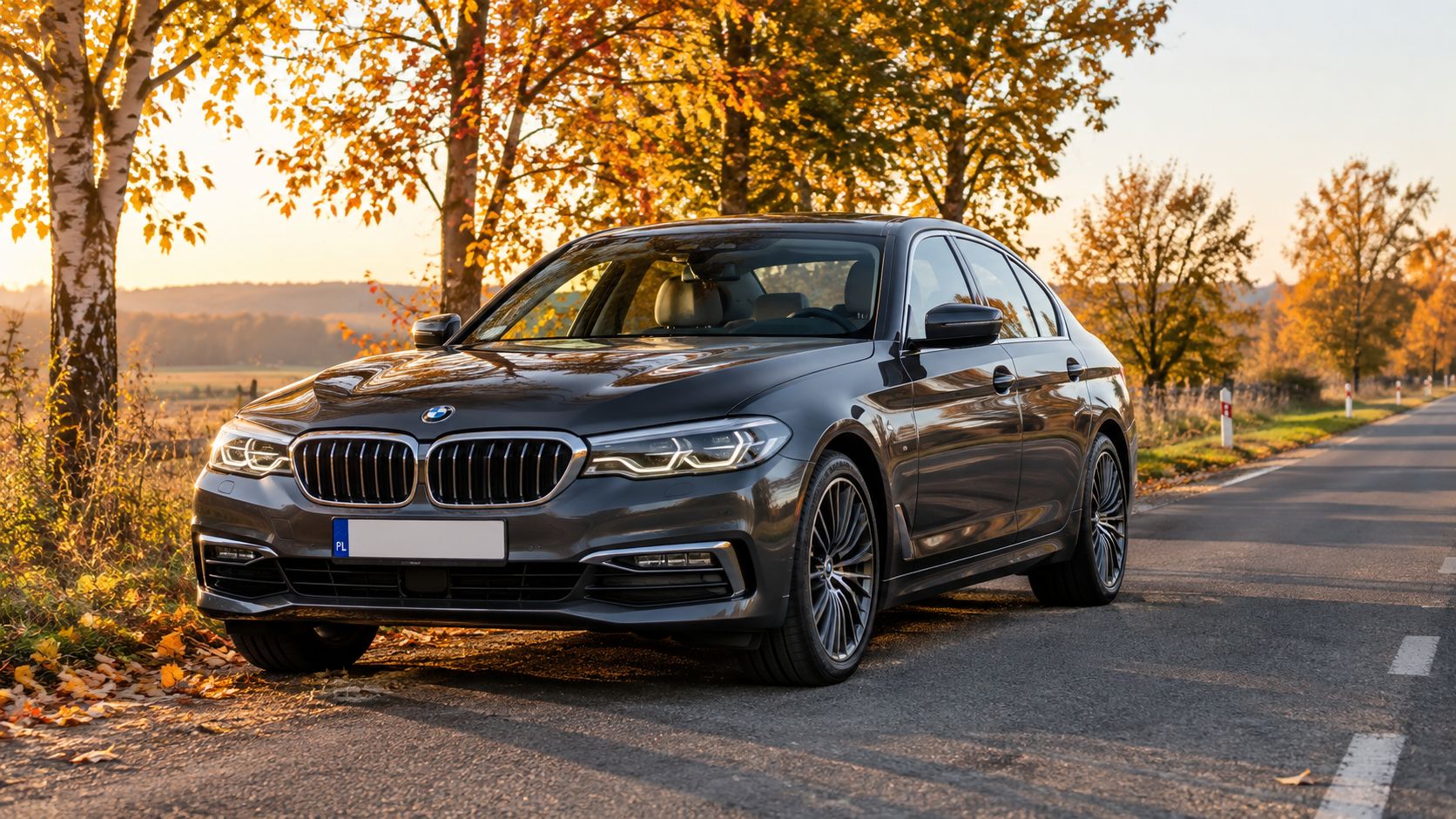
The full chain buyers need to price before bidding
The sequence is always longer than first-time importers expect:
-
Auction purchase
Hammer price plus auction fees. -
US inland transport
The car has to move from the auction yard to the export warehouse or port. -
Ocean freight
Usually container shipping to Europe. -
Customs clearance
This includes import formalities and duty handling. -
VAT settlement
The route matters. Clearance through a German port such as Bremerhaven can change VAT workflow compared with direct clearance through Gdynia. -
Polish excise tax
Many premium cars jump from “good deal” to “needs recalculation.” -
Local transport, adaptation, inspection, registration
Flatbed delivery, headlight conversion, rear fog solution where needed, paperwork, technical checks.
A practical way to avoid underbudgeting is to calculate all of this before placing any bid. A tool such as the DreamBid import cost calculator exists for exactly that reason.
The excise threshold that changes everything
In Poland, passenger cars are taxed at 3.1% for engines up to 2000 cm3 and 18.6% for engines above 2000 cm3, with the tax base tied to the vehicle's market value rather than invoice price, as explained in VartoCar's guide to importing a premium car to Poland. The declaration must be filed within 14 days of import and paid within 30 days, otherwise the car can't be registered.
That single threshold changes model strategy.
A premium sedan with a smaller engine can remain very attractive after tax. A large-displacement SUV may still work, but only if the auction buy is strong enough and the repair plan is disciplined.
Europe doesn't tax premium cars evenly
The broader EU picture is fragmented. The European Commission notes that buying and selling cars across borders can trigger registration taxes and road taxes in addition to the purchase itself, as outlined on the European Commission page on buying and selling cars across borders. In practice, the same car can land very differently depending on where it is cleared, registered, and used.
The UK shows how ownership cost can keep rising after purchase. Its luxury-car surcharge applies to cars with a list price above £40,000 and runs from years two through six after first registration, based on Rentolux's summary of luxury car tax rules. That's not a Polish rule, but it's a useful reminder that premium ownership costs don't stop at the sale.
What usually works
- Smaller-engine premium cars: Easier to keep in the lower excise bracket.
- Repairable cosmetic or light front-end damage: Better control over final cost.
- Cars with desirable options but ordinary mechanicals: Buyers pay for visible comfort and tech.
What usually fails
- Big-engine cars bought on thin margins: Excise can wipe out the spread.
- Complex air suspension or heavy electronics damage: The parts list grows.
- Projects budgeted only from hammer price: This is the most common import mistake.
How to avoid costly mistakes when buying premium cars at auction
Auction buying punishes optimism. Premium cars punish it faster.
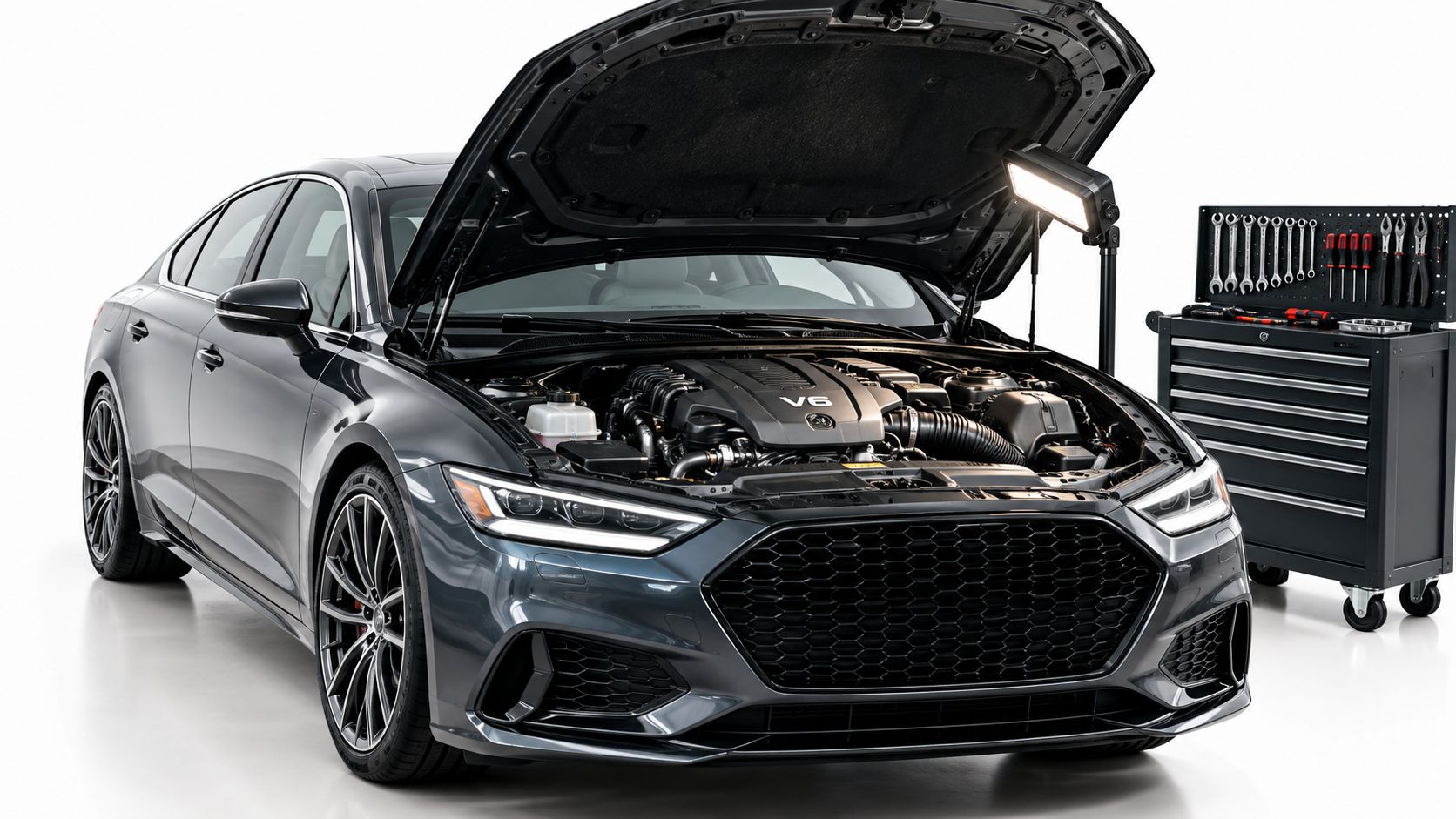
A premium car with minor visible damage can still hide expensive losses in sensors, seat systems, cameras, insulation, suspension hardware, and control modules. The buyer who only checks the headline damage usually pays twice.
Read the listing like a repairer, not a shopper
Start with the title type and the sale source. Insurance-sourced first-time listings are often easier to interpret than vehicles that have circulated through multiple hands after rough repairs or partial disassembly.
Then review the basics in order:
- VIN history: Check whether the car appeared at auction before, whether the damage pattern changed, and whether parts disappeared between listings.
- Run and drive status: Helpful, but never enough on its own.
- Airbags: Deployed airbags can turn a simple hit into a much larger repair.
- Water clues: Mud lines, damp carpet, corrosion in connectors, or odd interior staining should stop the process until the history is clear.
- Panel gaps and wheel position: These often show structural distortion before the listing says it directly.
If you want to inspect history properly, use a VIN tool rather than relying only on auction captions. The VIN decoder and history checker is built for that first filter.
Workshop habit: Zoom into the background and the floor, not only the damaged bumper. Flood traces and parts removal often show up away from the headline damage.
Premium-specific traps people miss
The first is lighting. US headlights often need adaptation for EU compliance. On premium cars, headlights aren't just lamps. They can be matrix units, adaptive modules, and expensive coded components.
The second is cabin equipment. Acoustic glass, powered seats, seat ventilation, radar in bumpers, surround-view cameras, soft-close doors, and active safety hardware all raise the rebuild complexity. A cheap door from another trim level may physically fit and still leave you with option mismatches or coding work.
The third is EV enthusiasm. A discounted premium EV looks modern and rational, but timing matters. If resale is part of your plan, fast depreciation can turn a neat import into a weak exit.
Safeguards that actually help
Some controls are simple and effective:
- Use structured VIN analysis: Don't rely on memory or screenshots.
- Prefer complete, unstripped cars: Missing trim and modules often cost more than visible body damage.
- Check export warehouse photos: Later-stage images often reveal details hidden in auction photography.
- Set a hard bid ceiling before live bidding starts: Emotion is expensive at auction.
DreamBid's SmartSelect workflow, VIN analysis, and warehouse photo updates are examples of systems that help buyers separate repairable stock from attractive junk. The value isn't hype. It's discipline.
Your predictable import checklist with DreamBid from bid to registration
The import process works best when every step has a checkpoint. That's how you keep a premium car project from drifting into guesswork.
The seven milestones that matter
-
Open the account and set the deposit
Get auction access first. Don't choose the car before your bidding path is ready. -
Search by model, damage type, and VIN history
Filter hard. A smaller shortlist is better than browsing hundreds of emotional options. -
Set the bid limit
Use a landed-cost calculator, not instinct. You decide whether the car belongs in your budget or only in your wish list. -
Win the car and arrange US towing
Fast inland movement matters because storage and logistics delays create noise in the file. -
Ship in a container and track milestones
Good process means you know where the car is and what condition it's in before arrival. -
Clear customs and settle excise
The paperwork window matters. Miss filings, and registration becomes a procedural headache. -
Deliver, adapt, inspect, register
Headlights, rear lighting, technical inspection, and local registration finish the job.
What makes the process more predictable
For many buyers, the useful part is having one place to control bidding, VIN review, shipping stages, and cost visibility. DreamBid does that with 24/7 Copart and IAAI access, milestone tracking, a fixed 1,999 PLN net service fee, and a team built on more than 10 years in this trade.
For the step-by-step logistics chain itself, the import steps guide is the cleanest overview to review before you place money on any premium car.
What matters most is this. Premium imports work when you treat them like sourcing projects, not impulse purchases. The badge helps only after the math works.
If you're comparing premium cars from US auctions with local EU stock, DreamBid gives you one place to check VIN history, estimate the full landed cost, and manage shipping through to Poland. Before you bid on a BMW X5, Mercedes GLE, Tesla Model Y, or another premium car, calculate the total import cost and verify the vehicle history first.