



Blog
Luxury Cars from US Auctions to Europe Made Simple
cars at live US auctions right now
Bid yourself or buy instantly — delivery and customs included in the calculator
Meta description: Learn how to import luxury cars from US auctions to Poland and the EU, calculate landed cost, avoid bad buys, and clear customs without surprises.
The luxury car business is far bigger than most buyers assume. One market estimate put the segment at about USD 760 billion in 2025, with a projection to roughly USD 1.097 trillion by 2031 and an estimated 11.8 million luxury vehicles sold at an average transaction value of about USD 64,400 (Ken Research luxury car market data). That scale matters because it changes how you should think about importing. You're not hunting a rare curiosity. You're working inside a deep, liquid global market.
From a Polish and wider EU perspective, the question isn't whether luxury cars are desirable. It's whether a specific car still makes sense after shipping, customs, VAT, excise, compliance work, and repair. That's where many buyers get it wrong. They focus on the hammer price and ignore the landed cost.
US auctions can create a real pricing gap. In practice, buyers often target 20% to 40% savings potential against comparable European market pricing, but that only holds when the numbers work all the way to registration. A cheap bid can still become an expensive car.
Table of Contents
- Why luxury cars from US auctions attract European buyers
- What counts as a luxury car and which types pay off to import
- How to source luxury cars on Copart and IAAI without costly mistakes
- Full cost breakdown for importing luxury cars to Poland and the EU
- From winning bid to your doorstep in Europe
- Repair compliance and resale math for luxury imports
- How DreamBid makes luxury car import predictable and transparent
Why luxury cars from US auctions attract European buyers
A luxury import starts to look attractive when the full spread is wide enough. In practice, that means the US car still needs room for fees, freight, duty, VAT, excise, compliance work, repair, and margin before you place a bid.
The US auction market gives buyers something Europe often does not. Volume in one place. Copart and IAAI list insurance losses, lease returns, theft recoveries, hail cars, cosmetic damage units, and high-spec dealer stock every day. That depth matters because a European buyer can wait for the right specification instead of forcing a deal on the wrong car.
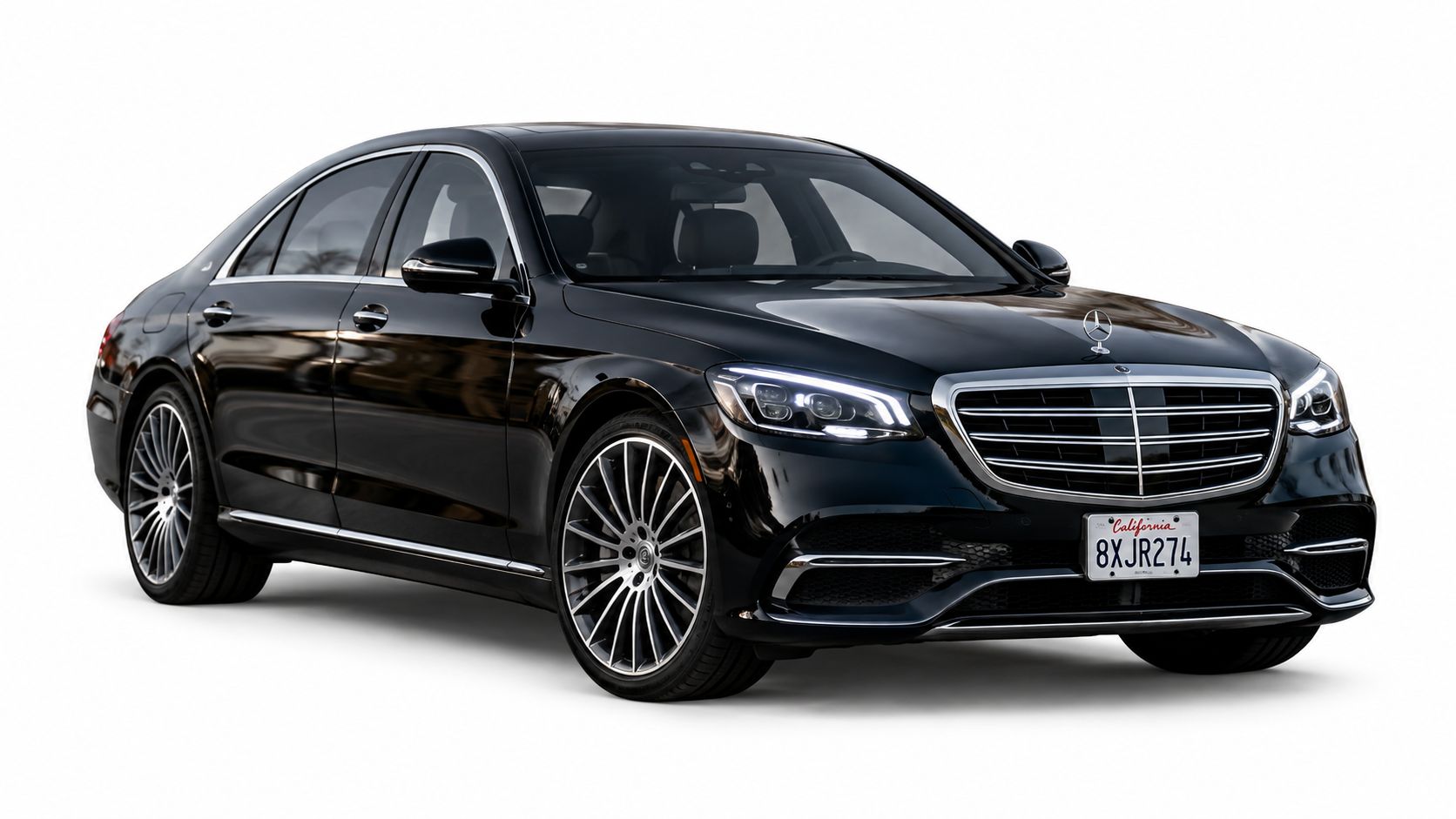
The market is large enough to support selective importing
Luxury imports work best when you stay selective. There is enough supply in the US to pass on cars with inflated fees, awkward damage, poor photos, missing keys, or expensive restraint-system issues and wait for cleaner opportunities.
Configuration is part of the draw. American-market luxury cars often come with stronger trim packages, larger screens, premium audio, ventilated seats, driver-assistance options, and wheel or interior combinations that are harder to find in local stock. That can help resale in Poland and elsewhere in the EU, but only if the compliance work stays manageable and the final number still fits the market.
A practical example makes the point better than generic talk about "cheap US cars."
Take a late-model BMW X5 with front-end damage. If it sells at auction for $24,000, many first-time buyers compare that number with a European retail listing at €43,000 and assume the spread is profit. An experienced importer does the opposite. Add auction fees, US inland transport, ocean freight, customs duty, VAT, excise if the car enters Poland, port charges, broker handling, parts, paint, labor, headlamp adaptation, rear fog light work, and diagnostics for radar or airbag systems. A car that looked cheap at bid stage can land and repair into the mid-€30,000 range before registration. At that level, the deal may still work, but only if the mileage, equipment, and damage profile are right.
That is why the auction price alone tells you very little.
Why the winning bid is only the first number
A low bid can produce a bad import. A higher bid on the right car can still leave margin if the downstream costs are controlled.
Practical rule: If you cannot calculate the full landed cost before bidding, you are not buying a luxury car. You are accepting open-ended cost risk.
This matters more with premium vehicles than with lower-value stock. Parts prices are higher, calibration work is more common, and seemingly minor issues can become expensive. Adaptive LED or matrix headlights, 360 cameras, active grille shutters, seat airbags, and driver-assistance sensors all add cost quickly. On some models, one missing module or one damaged wheel can change the repair budget by thousands.
Where buyers usually make the first mistake
They compare a US auction bid with a European asking price instead of a real landed-cost scenario.
The right comparison looks like this:
- US purchase side: Hammer price, auction fees, inland transport, port charges, and shipping.
- EU entry side: Customs duty, VAT, excise where applicable, clearance, and local delivery.
- Workshop side: Parts, labor, diagnostics, coding, calibration, lighting changes, and registration compliance.
- Exit side: Real local transaction value, not an optimistic classified ad.
Buyers who handle it this way usually avoid the expensive mistakes early. Buyers who chase the badge first often end up with a car that is harder to repair, slower to register, and too expensive to resell at a healthy margin.
What counts as a luxury car and which types pay off to import
Luxury cars make up a small share of the global vehicle market, but they account for a disproportionate share of expensive import mistakes. The reason is simple. In this bracket, the badge matters less than the cost stack behind the badge.
A useful historical marker is the 1901 Mercedes 35 hp, which helped define the early idea of a luxury car as a mix of engineering, performance, and prestige, as noted earlier in the article. That definition still holds, but for import work I use a stricter one.
A luxury car is any vehicle where the ownership proposition depends on high-spec equipment, stronger materials, more complex electronics, and a buyer who expects a finished car to feel premium in every detail. That includes executive sedans, flagship SUVs, grand tourers, performance coupes, and some premium EVs. Analysts at Fairfield Market Research have also noted that SUVs now represent a large share of the global luxury segment, which matches what buyers across Poland and the wider EU ask for.
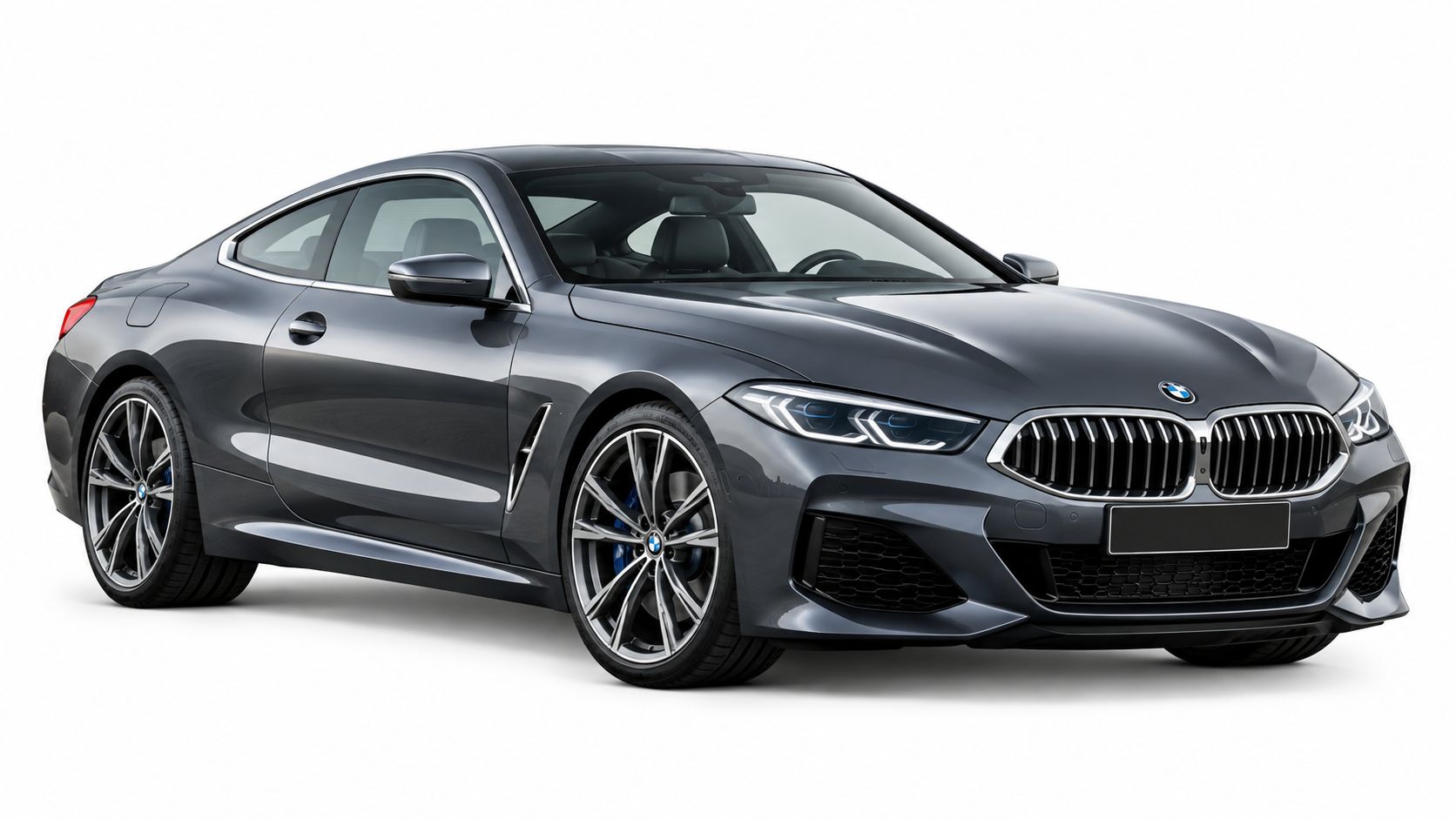
Which luxury cars usually import well
The best import candidates are not always the most expensive cars. They are the ones where US supply is strong, damage is repairable, parts can be sourced without long delays, and the finished car still fits local demand after duty, VAT, transport, workshop time, and registration changes.
Four groups usually work best:
- Premium SUVs: This is the safest volume play in the segment. Demand is broad, equipment levels in US cars are often strong, and resale is easier if the car is repaired correctly. For model-by-model examples, this guide on luxury SUV import choices shows where the numbers usually work.
- Prestige sedans: Cars like the 5 Series, E-Class, A6, 7 Series, S-Class, and A8 can pay off, but only if bought with enough spread to cover suspension work, electronics, and cosmetic reconditioning.
- Luxury EVs: These can work well when battery condition is clear and the damage is limited. They stop making sense fast if the car needs high-voltage parts, brand-locked diagnostics, or long calibration work.
- US-heavy trims and drivetrains: Some engines, option packs, and long-wheelbase or high-output variants are easier to find in the US than in Europe. That can create a resale angle if the spec is desirable and legal adaptation is straightforward.
In practice, loaded mid-range premium models often outperform top-spec flagships on margin. A cleanly repairable X5, GLE, Q7, or 540i usually leaves less room for surprise than a heavily optioned Bentley, Range Rover Autobiography, or S-Class with suspension, lighting, and interior faults.
Which ones usually do not
The wrong luxury car usually fails on repair complexity, not auction price.
I heavily discount or skip cars with:
- Structural damage in expensive areas: A bent front rail, A-pillar, roof edge, rear floor, or suspension mounting point can turn a promising car into a poor trade.
- Flood or heavy water exposure: Premium cabins hide too many modules, connectors, amplifiers, seat functions, and comfort systems for this to be a cheap gamble.
- Hard-to-source trim and lighting parts: Matrix headlights, rare interior finishes, active seats, soft-close systems, and branded audio components can tie up capital for weeks.
- Neglected interiors: Premium buyers judge the cabin in seconds. Cracked leather, stretched bolsters, stained headliners, missing trim, and poor dye repairs all cut resale value.
Interior condition deserves more attention than many auction buyers give it. Leather restoration is possible, but not every seat should be restored and not every worn surface is acceptable in a premium resale car. These Titan Coatings leather care tips help when you compare normal wear against interiors that have been badly neglected or cheaply refinished.
A luxury import pays off when the car can be brought to EU-ready condition at a predictable total cost, then sold into a real local price band with margin left after repair, compliance, and time.
How to source luxury cars on Copart and IAAI without costly mistakes
A luxury auction buy goes wrong long before the car reaches Europe. The mistake usually happens at the screening stage, when the bidder prices the visible damage but misses title limits, missing options, compliance parts, or signs that the car has already been picked over.
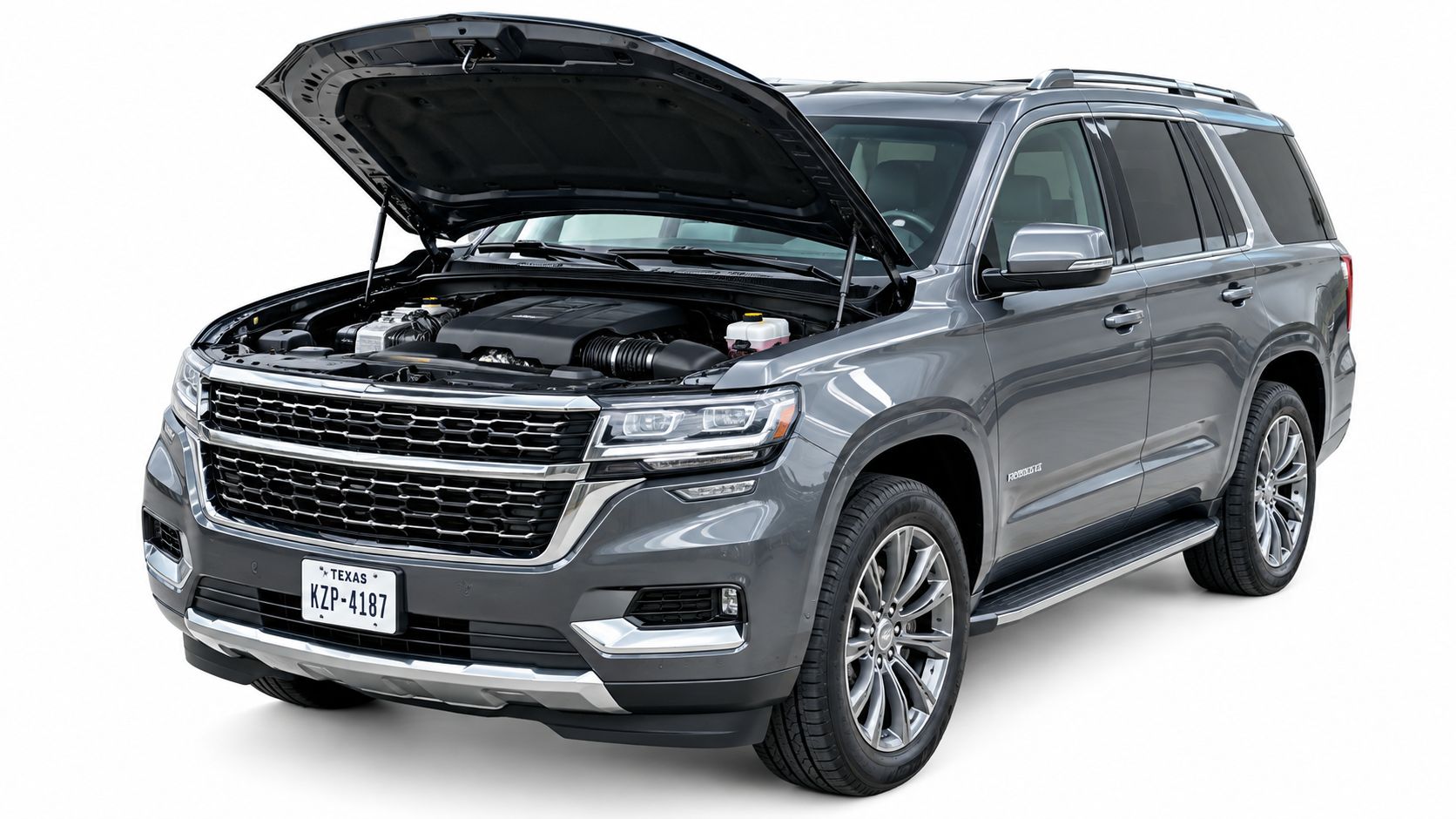
On Copart and IAAI, the goal is not to find the cheapest Mercedes, BMW, Porsche, or Range Rover. The goal is to find a car whose total path to EU resale is still predictable after transport, customs, VAT, excise, parts sourcing, coding, lighting changes, and workshop time. That changes how you read every listing.
What to compare before you bid
I start with the file quality and seller logic. If the listing does not tell a coherent story, I treat the car as higher risk.
Check these points first:
- Seller type: Insurance inventory is often easier to assess because the loss event is usually clearer. Dealer consignments and private consignments need more caution, especially when the photos are selective.
- Title status: Clean, salvage, rebuilt, non-repairable, and certificate of destruction do not lead to the same registration outcome in Europe. Some titles kill the deal before repair even begins.
- Airbag deployment: On a luxury car, deployed airbags rarely mean just airbags. Dash trim, belts, modules, headliner sections, seat components, and coding can push the repair far beyond what the exterior suggests.
- Suspension stance: One wheel sitting back in the arch, extra negative camber, or a crooked steering wheel often points to arms, knuckles, subframe damage, or a shifted mounting point.
- Panel alignment: Hood height, fender-to-door gaps, trunk fit, and headlamp seating often show impact spread better than the written description.
- Options present or missing: Cameras, radar units, premium headlights, active grille shutters, massage seats, and rear entertainment parts are expensive to replace and easy to overlook in auction photos.
For a broader overview of filters, title reading, and auction search tactics, this guide to luxury car auctions is useful while building a shortlist.
Copart versus IAAI in practical use
Both platforms can produce good buys. Both can also produce expensive mistakes.
Copart usually gives you larger volume and a wide spread of insurer stock. IAAI often presents damage in a way that is easier to compare lot to lot, especially when the condition notes are fuller. That said, I do not assign trust based on platform alone. I assign trust to consistency.
If the front end looks light but both curtain airbags are out, something is missing from the story. If the rear bumper is marked as the primary hit but the rear wheel position looks wrong, I budget for suspension or floor work until proven otherwise. If the car appears at auction more than once with changing damage notes, I assume there is a reason previous buyers walked away.
Short photo sets are a warning sign on premium stock. Luxury cars hide cost in the systems behind the trim. Missing interior shots, no close-up of the instrument cluster, no seat detail, no image of the suspension corner, and no clear headlamp view all reduce bid confidence.
The checks that matter for EU import decisions
A car that makes sense for a US repairer can still fail as a Polish or EU import because the missing cost sits outside the auction estimate.
Before bidding, verify these points:
- Lighting specification: US headlights, rear indicators, side markers, and rear fog requirements can add real cost. On premium models, replacement units and coding are rarely cheap.
- Instrument and software configuration: Speed display, language, navigation region, connected services, and assistance-system coding can all take time to sort properly.
- VIN history consistency: Previous auction appearances, damage in different areas, or long gaps between events often point to incomplete repairs or a car passed around for a reason.
- Water, salt, or contamination clues: Silt, corrosion on seat frames, cloudy lamp internals, wet insulation, or oxidized connectors matter more than polished paint in the photos.
- Keys and start condition: A missing key on a high-end car can mean towing, dealer programming, module matching, and delays you need to price in early.
A simple test helps. If the damage story cannot be explained in one calm sentence after reviewing the photos, title, options, and VIN history, the bid should be conservative or skipped.
The buyers who stay profitable in this segment do not chase auction wins. They reject cars with unclear downside, then bid only where the repair scope, compliance work, and resale band are all visible before the auction ends.
Full cost breakdown for importing luxury cars to Poland and the EU
On premium imports, a car that looks cheap at auction often stops being cheap once duty, VAT, excise, freight, compliance work, and local handling are added in the right order.
That order matters more than the winning bid.
For imports into the European Union, passenger cars usually face 10% customs duty, and Poland applies 23% VAT at import under the standard structure used for car entries into the country (EU duty and Polish VAT outline). In practice, the landed number is built from the car price plus the transport and import layers around it, not from the hammer price alone.
The excise threshold that changes the deal
Poland's passenger-car excise is 3.1% up to 2,000 cm³ and 18.6% above 2,000 cm³ for first registration in Poland, including used imports (Polish vehicle excise rules).
On luxury cars, this is often the line between a workable margin and a dead deal. A well-bought 2.0-liter Audi, BMW, or Mercedes can survive freight and compliance costs. The same model with a 3.0-liter or 4.0-liter engine starts with a much heavier tax burden before any repair invoice appears.
Landed cost stack for a US luxury car imported to Poland
| Cost element | Typical rate or range | Applied on |
|---|---|---|
| Auction purchase price | Varies by vehicle and bidding outcome | The car itself |
| Auction fees | Varies by auction and final price | Added after the winning bid |
| US inland transport | Varies by pickup location and port route | Moving the car to the export warehouse or port |
| Ocean freight | Varies by port, method, and schedule | Shipping from the US to Europe |
| EU customs duty | 10% | Import value |
| VAT in Poland | 23% | Charged on the import value at destination |
| Polish excise up to 2,000 cm³ | 3.1% | Passenger cars up to 2.0L |
| Polish excise above 2,000 cm³ | 18.6% | Passenger cars above 2.0L |
| Port, handling, documents, local towing, compliance work, repairs | Varies by vehicle and route | Added after arrival and before registration |
A practical budget uses four separate buckets: acquisition, logistics, taxes, and post-arrival work. That last bucket catches many first-time buyers. On a luxury import, it can include lamp conversion, rear fog setup, coding, diagnostics, transport from port, registration paperwork, and parts delays if the correct EU-spec components are not in stock.
What a workable pre-bid calculation looks like
Use the retail resale range in Poland or your target EU market only as the final check. Start with the full landed cost first. Then add repair and compliance cost. Then leave room for the margin you need.
That sequence avoids the usual mistake, which is treating tax as a side note and repairs as an estimate that will somehow stay small.
A sound pre-bid sheet usually includes:
- hammer price ceiling
- auction and payment fees
- inland US transport
- ocean freight
- duty, VAT, and excise
- port and customs handling
- towing after arrival
- compliance changes for EU registration
- mechanical and body repair reserve
- resale preparation and sales margin
For buyers who want to model this before the auction closes, a car import cost calculator for Poland and the EU is more useful than another set of auction photos.
Port choice changes the tax and cash-flow picture
The clearance route also affects the numbers. Some importers use German ports such as Bremerhaven because the customs process or onward movement fits their structure better. Others clear directly in Poland through Gdynia and keep the file domestic from the start.
Neither route is automatically cheaper. The better route depends on the importer of record, the registration country, the VAT treatment, and how quickly the car needs to move from port to workshop.
If the bid sheet does not show landed cost, compliance cost, and resale margin on one page, the number is incomplete.
From winning bid to your doorstep in Europe
A luxury import can sit for days after purchase because one missing title signature stops the export file cold. The car may be paid for, but it is not moving until the paperwork, transport booking, and customs path all line up.
The first risk is paperwork, not shipping
For used motor vehicles exported from the United States by vessel or aircraft, US Customs requires the vehicle and export documents to be presented at least 72 hours before export. For titled vehicles, the file includes the original Certificate of Title or a certified copy plus two complete copies (US Customs vehicle export rules).
That requirement drives the whole post-auction timeline. If the title is delayed, assigned incorrectly, or sent to the wrong export point, storage starts running and the booking can be missed. On high-value cars, those mistakes hurt twice. They delay delivery and they add cost to the landed figure you built before bidding.
The physical move is usually straightforward. The handovers are where files go wrong.
What the movement chain actually looks like
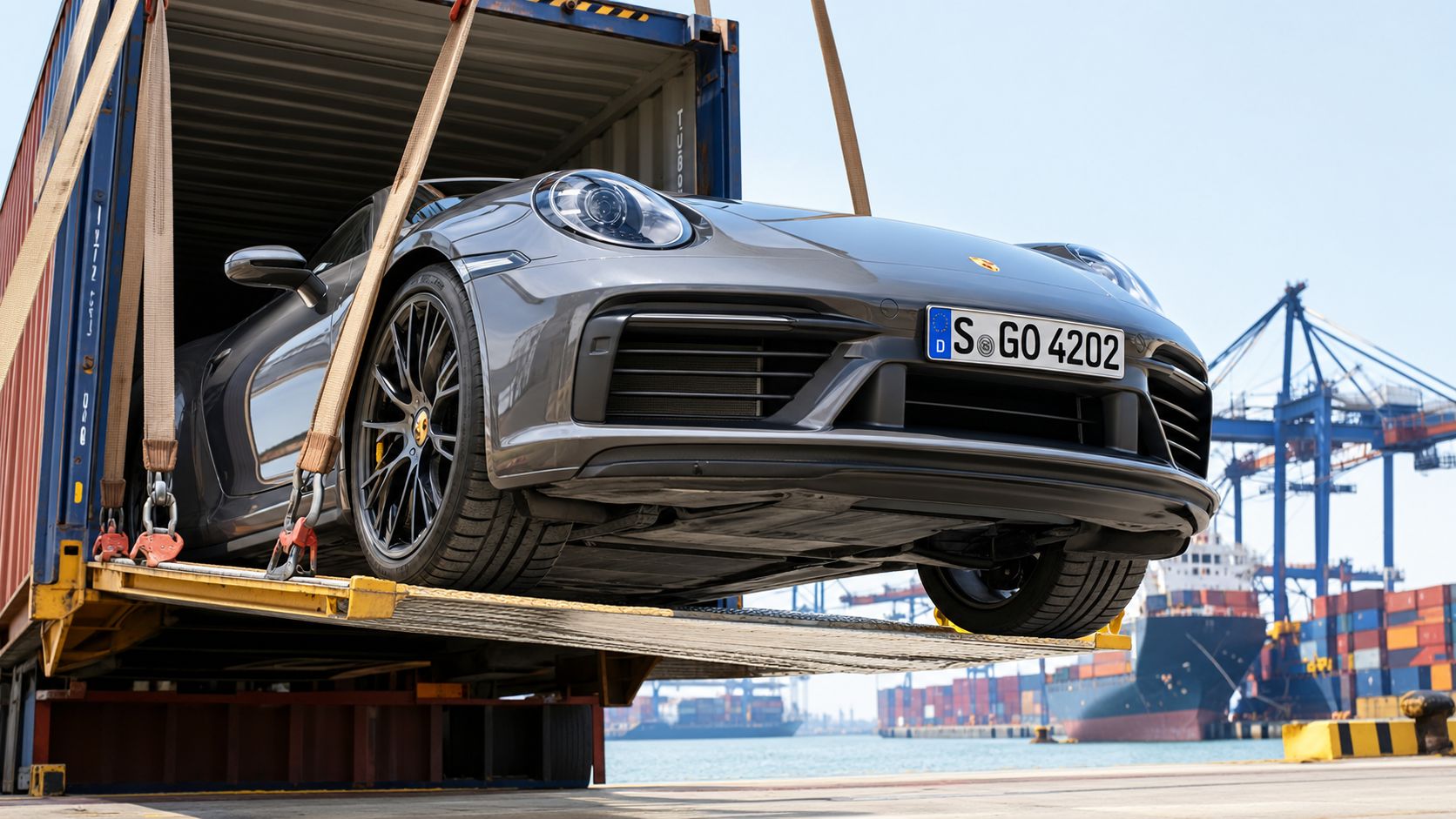
After payment clears, the auction releases the car under its own rules. Then the vehicle is collected and moved to a warehouse or port facility. At intake, the operator records condition, checks the VIN against the file, and prepares the unit for loading.
Next comes container loading or port staging, depending on the route. Good operators photograph the car at this stage because disputes often start here, not at sea. After ocean freight, the car lands at the chosen EU gateway, clears customs, and moves by truck to the workshop, dealer, or end buyer.
That is the normal chain. It works well when every transfer leaves a document trail.
Where time and money usually slip
The common delays are routine, but they still change the final number:
- title missing or not properly assigned
- auction release held up by payment or storage rules
- late pickup from the yard
- port congestion or missed vessel cut-off
- customs queries on value, documents, or importer details
- no workshop slot available after arrival
I have seen buyers focus on the sailing date and ignore the first three steps. That is backwards. A luxury car does not become predictable once it is on the water. It becomes predictable when the title, release, inland move, loading photos, and customs file are controlled from day one.
The route should match the file
A car clearing through Bremerhaven needs a different handling plan than one clearing through Gdynia. The better route depends on who is acting as importer of record, where VAT is being handled, how the car will move inland, and whether it is going straight to repair or to a buyer.
This matters more with premium stock because the cash is tied up for longer and post-arrival costs are higher. If a car lands in Europe with no confirmed customs handler, no towing booked, and no workshop intake date, the process starts generating avoidable cost immediately.
Buyers in Poland usually want three things after the hammer falls: proof the car was released, proof it was loaded, and proof someone owns the customs step. That level of visibility keeps the shipment from turning into a black box and protects the landed-cost math that justified the bid in the first place.
Repair compliance and resale math for luxury imports
Luxury cars punish sloppy repairs faster than mainstream models. The panel fit has to be right. The cabin has to feel right. The warning lights have to stay off. And on many premium cars, suspension, driver assistance calibration, and acoustics matter just as much as visible cosmetics.
Compliance and driving quality are linked
Modern luxury suspension systems often use semi-active or active damping that adjusts shock absorber stiffness in milliseconds using sensor data and control algorithms. Production systems include air springs, magnetorheological dampers, and fully active hydraulic setups. The Mercedes-Benz ABC system independently controls spring and damping forces at each wheel, and GM's MagneRide first appeared in the Cadillac STS in 2002 (overview of electronically controlled dampers in luxury vehicles).
That matters in repair because a car can look straight and still drive badly. Bent suspension geometry, damaged sensors, poor calibration, or cheap replacement parts can destroy what buyers expect from a premium car.
Cabin noise and body style matter more than many sellers admit
Aerodynamics also affects resale quality, not just efficiency. Industry coverage notes that the average car typically sits around 0.25 to 0.30 Cd, while taller luxury SUVs often fall in the 0.35 to 0.45 Cd range, which directly affects wind noise and cabin quietness at highway speed (NHTSA document discussing drag and airflow effects). If a repaired SUV has poor sealing, misaligned trim, or compromised underbody parts, the buyer will often hear it before they see it.
This is why “good enough” body repair rarely works on luxury cars. Door seals, glazing, undertrays, wheel arch liners, and bumper fit all affect the finished feel.
The ownership burden needs to be in the resale plan
Independent consumer-facing material notes that luxury cars typically cost about $900 to $1,000 per year in maintenance and repairs versus roughly $652 across all vehicles, and that luxury cars cost about 18% more to insure than a moderately priced sedan. The same market source projects battery-electric, plug-in hybrid, and hybrid models could rise from 40% of luxury sales in 2025 to 74% by 2031 (luxury EV and ownership-cost overview).
Those numbers matter because a resale buyer doesn't only buy the repaired car. They buy the future running cost.
In India, premium buyers are also moving into EVs faster than the broader passenger market. One report noted that every fourth BMW sold in H1 2026 was electric, while EVs were only around 8% to 9% of the broader passenger-vehicle market, and luxury cars represented only about 1.1% to 1.2% of total passenger-vehicle sales in FY26 but roughly 2.5% to 2.7% of the BEV market (premium EV adoption example). The takeaway for EU importers is qualitative: premium EV demand is real, but battery health, charging expectations, and software functionality have to be checked with the same discipline as structural damage.
A simple resale filter works well:
- buy damage you can explain,
- repair systems, not just surfaces,
- budget for compliance early,
- and assume the next buyer will inspect the car with less emotion than you did.
How DreamBid makes luxury car import predictable and transparent
On a luxury import, the auction win is only one line in the invoice. The decision is the landed cost to Poland or another EU market, plus the time and risk between the US yard and registration.
That is where process matters. A buyer needs auction access, VIN review, transport booking, customs handling, document control, and delivery updates in one operating flow. Split those jobs across several brokers and forwarders, and small errors start getting expensive. A missing title check, a wrong customs assumption, or a delayed warehouse photo can change the margin on a premium car faster than many buyers expect.
For buyers who want to keep control of each stage, working with an importer step by step gives a much clearer picture than generic claims. The useful tools are simple and measurable: live Copart and IAAI access, a landed-cost calculator before bidding, VIN support, milestone photos during export handling, and one workflow from the US auction yard to Poland.
DreamBid presents the process in that practical format. It gives buyers 24/7 access to inventory, cost calculation tools, VIN analysis support, and end-to-end logistics for a fixed fee of 1,999 PLN net. On luxury cars, a fixed service fee matters because it keeps the importer's compensation separate from the vehicle price. That removes a common conflict on higher-value purchases.
Experience matters too, but only if it shows up in routine control points. On premium stock, I look for clear answers on title status, export documents, port routing, customs path, and condition evidence before the car leaves the US. If an importer cannot give a straight answer on those points, the problem usually appears later as storage, compliance delay, or a resale discount.
Luxury imports reward discipline. Clear numbers before the bid, visible milestones after payment, and realistic advice on which cars to leave alone make the whole transaction more predictable. DreamBid keeps those parts in one workflow, which is what this segment needs if the goal is margin, not just a cheap hammer price.