



Blog
Electric Cars from US Auctions to Poland: A 2026 Guide
cars at live US auctions right now
Bid yourself or buy instantly — delivery and customs included in the calculator
Importing an electric car from a US auction to Poland typically delivers a 20 to 40% saving versus the European used market once transport, customs, VAT, and Polish excise are factored in. BEV means a battery electric vehicle that runs only on electricity, PHEV means a plug-in hybrid with both a battery and a petrol engine, and HEV means a regular hybrid that mixes petrol and electric drive but doesn't plug in.
That saving is why so many Polish buyers have stopped treating electric cars as a niche experiment and started treating them like a sourcing problem. The market itself has already moved. Global electric car sales exceeded 17 million in 2024, up by more than 25% from 2023, and that meant more than one in five cars sold worldwide was electric according to the IEA executive summary.
For a first-time buyer, the central question isn't whether electric cars are mainstream. They are. The better question is whether a US auction car can land in Poland at the right total cost, with a battery that still makes sense, and with documents that won't block registration later.
Table of Contents
- What electric cars are and why import from US auctions
- BEV, PHEV, and the battery basics that matter at auction
- Reading auction listings without buying a battery problem
- Total cost of importing an electric car to Poland
- Polish and EU rules every EV importer must respect
- Shipping routes, ports, and delivery to your door
- Your first import checklist and how DreamBid helps
- Final verdict and frequently asked questions
What electric cars are and why import from US auctions
Electric cars come in three practical families, and if you mix them up, you can misprice the whole import.
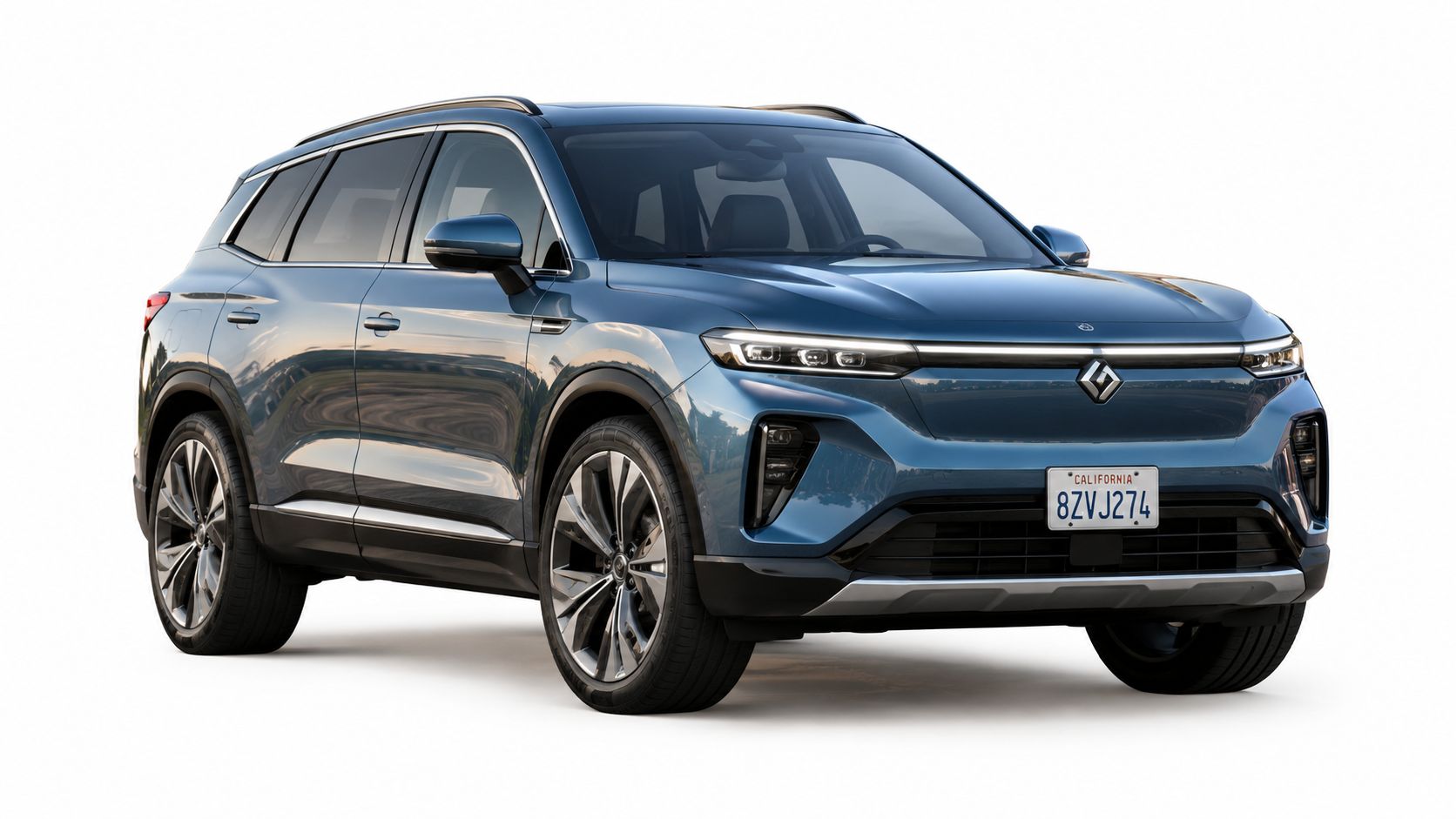
A BEV is the simplest. No petrol engine. No exhaust. You charge it and drive it. A Tesla Model 3, Nissan Leaf, or Chevrolet Bolt fits here.
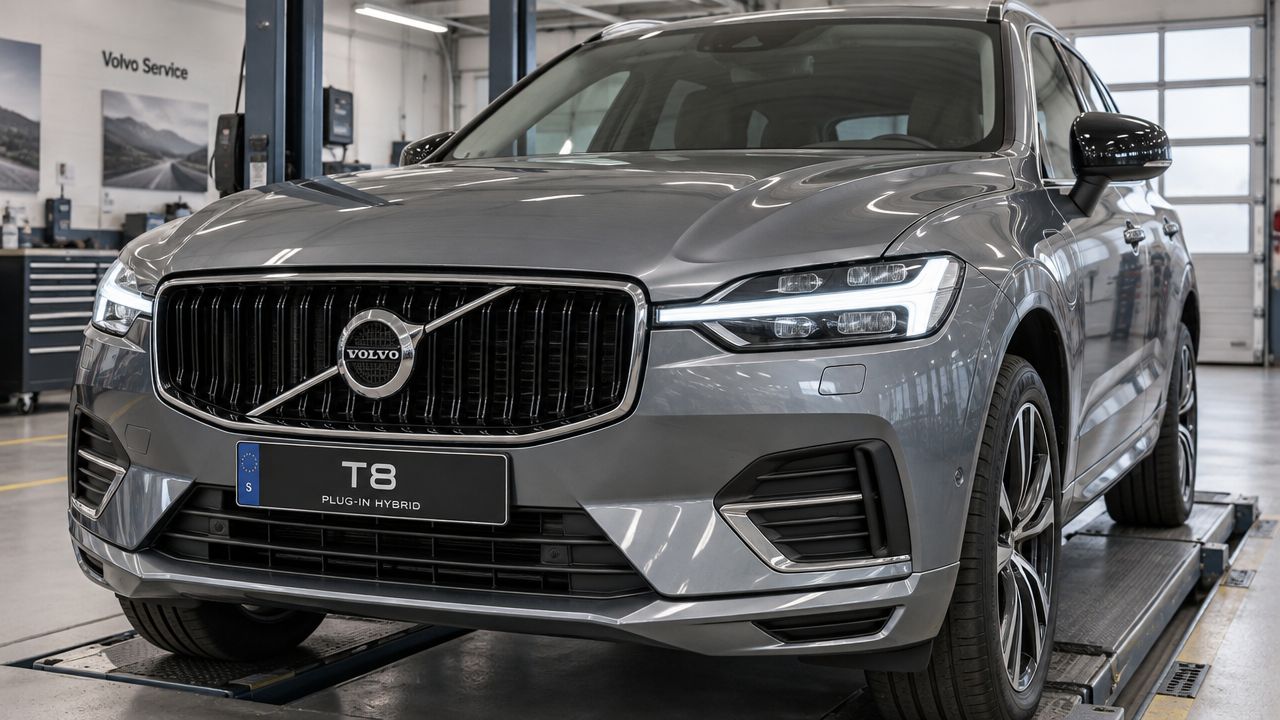
A PHEV adds a petrol engine as backup. You can drive short local trips on battery, then continue on petrol when the charge runs out. A Volvo XC60 T8 is a good example. An HEV also uses electric drive, but you don't plug it in. It charges itself while driving and braking.
Why US auctions are a separate market
A Polish used-car portal shows you retail stock. Copart and IAAI show you insurance stock, dealer disposals, repossessions, and damaged vehicles that often never enter the normal European retail stream.
That matters because electric cars from US auctions aren't just "cheaper versions of the same thing." They're a separate inventory pool. You often find more Teslas, Bolts, and Leafs there than in many local dealer networks, especially if you're open to cosmetic damage, light side damage, or theft-recovery cases.
Practical rule: A salvage title isn't automatically a bad buy. A badly repaired structure is the problem, not the auction channel itself.
For buyers still learning the basics, the ShamAuto guide to EVs is a useful plain-language read because it helps separate drivetrain types before you get lost in auction jargon.
Why import instead of buying locally
The short answer is price spread. The longer answer is selection plus pricing inefficiency. A US auction lot may look rough in the photos, but after transport, taxes, and a realistic repair plan, it can still undercut the asking price of comparable European stock.
The key is to think in landed cost, not hammer price. That includes bidding fees, inland transport, sea freight, customs handling, VAT, excise where relevant, technical work, and registration prep. If you're comparing routes, this overview of electric cars from the USA to Poland gives a useful market-specific starting point.
BEV, PHEV, and the battery basics that matter at auction
If you're new to electric cars, use a fuel-tank analogy.
A BEV stores all its energy in one large battery. No petrol backup exists. When battery health is poor, the whole ownership experience changes because range drops directly.
A PHEV is like having a small electric tank plus a normal petrol reserve. Battery condition still matters, but a tired battery usually doesn't immobilize the car. It mainly reduces electric-only usefulness.
An HEV shares work between engine and battery, but it isn't built around external charging. That makes it a different auction calculation and, often, a different tax conversation.
The battery chemistries buyers hear about
Most first-time buyers meet two battery terms quickly: NMC and LFP.
- NMC batteries are common in many earlier EVs and long-range variants. Buyers like them for energy density, which usually means stronger range for pack size.
- LFP batteries are known for a different balance. They're often associated with durability-minded use and are common in some standard-range EV configurations.
At auction level, this matters less as a chemistry debate and more as a resale and use-case question. A city buyer who charges at home can live happily with a simpler battery and moderate range. A buyer who commutes long motorway distances in winter usually values usable range more than chemistry labels.
Battery health matters more than battery type
Real-world datasets have helped calm a lot of EV fear. One analysis covering more than 7,000 vehicles found that most packs were still above 80% state of health after 300,000 km, while a separate fleet study of 22,700 vehicles reported average degradation of about 2.3% per year in the battery longevity paper cited here.
That doesn't mean every auction EV is safe. It means you shouldn't assume an older EV is automatically a battery disaster.
A healthy high-mileage EV can be a better buy than a low-mileage flood car with hidden pack contamination.
Why this changes your bidding logic
With combustion cars, buyers obsess over engine noise and gearbox shock. With electric cars, you need a different filter:
- Battery condition first. A clean-looking body can't compensate for pack damage.
- Drivetrain type second. A PHEV carries different repair and tax consequences than a BEV.
- Charging history third. Some degradation patterns reflect how the car was charged, not only age.
If you're also comparing hybrids from the same auction channels, this guide to hybrid cars from the USA helps frame where hybrid logic differs from EV logic.
Reading auction listings without buying a battery problem
Auction photos tell the truth, but only if you know where to look.
A clean bonnet and polished front bumper can distract a first-time buyer from the dangerous areas on an EV. The battery pack sits low. So underbody hits, rocker damage, suspension intrusion, and floor deformation matter more than they do on many petrol cars.
What the title and VIN are telling you
Start with the VIN. Use it to confirm year, trim, drivetrain, and whether the car you're seeing in the listing matches the actual specification. Then check title status.
A clean title usually means the vehicle wasn't branded as a total loss. A salvage title means an insurer wrote it off. A non-repairable or similar brand is where caution turns into near-automatic rejection for most Polish buyers.
Where the photos usually reveal the real risk
Look at these image groups before you care about wheel design or interior trim:
- Undercarriage photos. Scrapes are one thing. Crushed battery tray zones are another.
- Side-impact angles. Door damage can be repairable. B-pillar and sill intrusion near the pack is more serious.
- Dashboard images. Warning lights, reduced power messages, and charging errors matter.
- Charge-port and trunk shots. Missing cables or disassembled trim can hint at prior electrical work.
- Rear-floor views. On some vehicles, this area can suggest whether modules or cooling components were disturbed.
Below is the shortest useful screening table I give to first-time buyers.
| Photo or data point | Red flag | Safe signal |
|---|---|---|
| VIN and trim data | Year or battery version doesn't match listing claims | VIN matches visible equipment and drivetrain |
| Title status | Non-repairable branding or unclear paperwork | Clear salvage classification with repair path |
| Undercarriage photo | Deformed floor, puncture area, torn shielding | Superficial scrapes, no visible tray intrusion |
| Dashboard image | Battery, charging, isolation, or drivetrain warnings | Car powers up without major EV fault messages |
| Odometer reading | Mileage conflict across records or photos | Consistent odometer story across listing data |
| Interior lower floor | Water line, silt, corrosion under seats | Dry cabin, no flood clues |
| State-of-charge screenshot | Missing battery data on a supposedly running EV | Visible charge level and normal system behavior |
For a broader damage-reading framework, this article on how to assess Copart damage is a practical companion.
Flood cars deserve extra suspicion on electric platforms because corrosion can return later in connectors, modules, and seat-level wiring.
Total cost of importing an electric car to Poland
The biggest mistake in EV importing is falling in love with the auction hammer price. A Tesla at $14,500 can still be a smart buy, but only if the full chain works.
The opposite is also true. A cheap-winning bid with battery faults, inland delays, and the wrong customs route can become expensive very quickly.
The cost lines that actually matter
For a 2022 Tesla Model 3 bought at Copart for $14,500, I build the landed budget in this order:
- Auction purchase price. Your winning bid.
- Auction gate and platform fees. These depend on the sale structure and invoice.
- US inland transport. From the auction yard to the export warehouse or port.
- Ocean freight. Usually container or RoRo, depending on vehicle condition.
- EU customs duty. For EVs, this guide uses 0% as the import duty assumption in the scenario.
- VAT. In Poland, the standard calculation buyers usually focus on is 23% VAT on the dutiable value.
- Polish excise. BEVs are exempt, while PHEVs are taxed at 3.1% or 18.6% depending on engine displacement below or above 2.0L under the Polish tax treatment summarized in this fleet excise overview.
- Registration prep. Technical inspection, sworn translations, plates, and local handling.
- Service fee. DreamBid uses a fixed 1,999 PLN net fee for the import process.
Sample landed cost table
Because some lines vary by auction yard, US state, and shipping method, the middle rows are best treated as variable operational items rather than fake precision.
| Cost line | Amount (USD/EUR/PLN) | Notes |
|---|---|---|
| Vehicle purchase | $14,500 | 2022 Tesla Model 3 hammer price |
| Auction fees | Variable | Depends on auction invoice and sale type |
| US inland transport | Variable | Depends on pickup state and export yard |
| Ocean freight | Variable | Container or RoRo changes the result |
| EU customs duty | 0% | EV scenario used in this example |
| VAT | 23% | Applied to the taxable customs value |
| Polish excise | Exempt for BEV | PHEV would change this line |
| Technical inspection and documents | Variable | Includes registration preparation costs |
| Service fee | 1,999 PLN net | Fixed import handling fee |
A realistic delivered outcome for that kind of car often lands around €22,000 to €26,000, while comparable European stock commonly sits around €28,000 to €34,000. Those ranges are part of the normal importer calculation model described in this piece on the car import cost calculator.
What swings the result most
Three variables usually move the final number harder than people expect.
First, battery condition. A cosmetically rough car with a healthy pack can be cheaper in the end than a cleaner car with electrical faults.
Second, port strategy. Routing through Bremerhaven or Gdynia can change paperwork flow, inland mileage, and storage risk.
Third, excise exposure. On a BEV, the exemption is a major advantage. On a PHEV, engine size starts to matter immediately.
Polish and EU rules every EV importer must respect
The legal side of EV importing isn't one rule. It's a chain. If one link fails, the car can sit, wait, or require extra work before registration.
Battery regulation and labeling
The EU battery framework is now much more than a sticker requirement. Regulation (EU) 2023/1542 covers the battery lifecycle from design and production to market placement, use, and end-of-life, and it applies directly across Member States as stated in the official EU regulation text.
For importers, the practical milestone is labeling. From 18 August 2026, batteries must bear a label with general information, and from 18 February 2027, all batteries must also carry a QR code. The same framework requires EV batteries, rechargeable industrial batteries above 2 kWh, and light means of transport batteries to show a carbon-footprint label and performance class in the EU Regulation 2023/1542 text.
Polish registration and tax logic
In Poland, battery electric vehicles and fuel cell vehicles are exempt from excise duty, and the same 2026 summary notes a higher business depreciation limit of PLN 225,000 for BEVs and FCEVs with 0 g CO2/km. It also notes a separate excise preference for certain PHEVs up to 2,000 cc until the end of 2029 in the same Polish fleet excise summary.
That means a BEV import often moves through the Polish tax side more cleanly than many buyers expect. A PHEV needs closer reading because the combustion engine still drives the excise treatment.
Charging compatibility and technical inspection
EU charging practice is standardized around CCS for fast DC charging and Type 2 for AC charging, which is why imported EVs usually need to fit the common European plug ecosystem described by the EU battery regulation portal's interoperability summary.
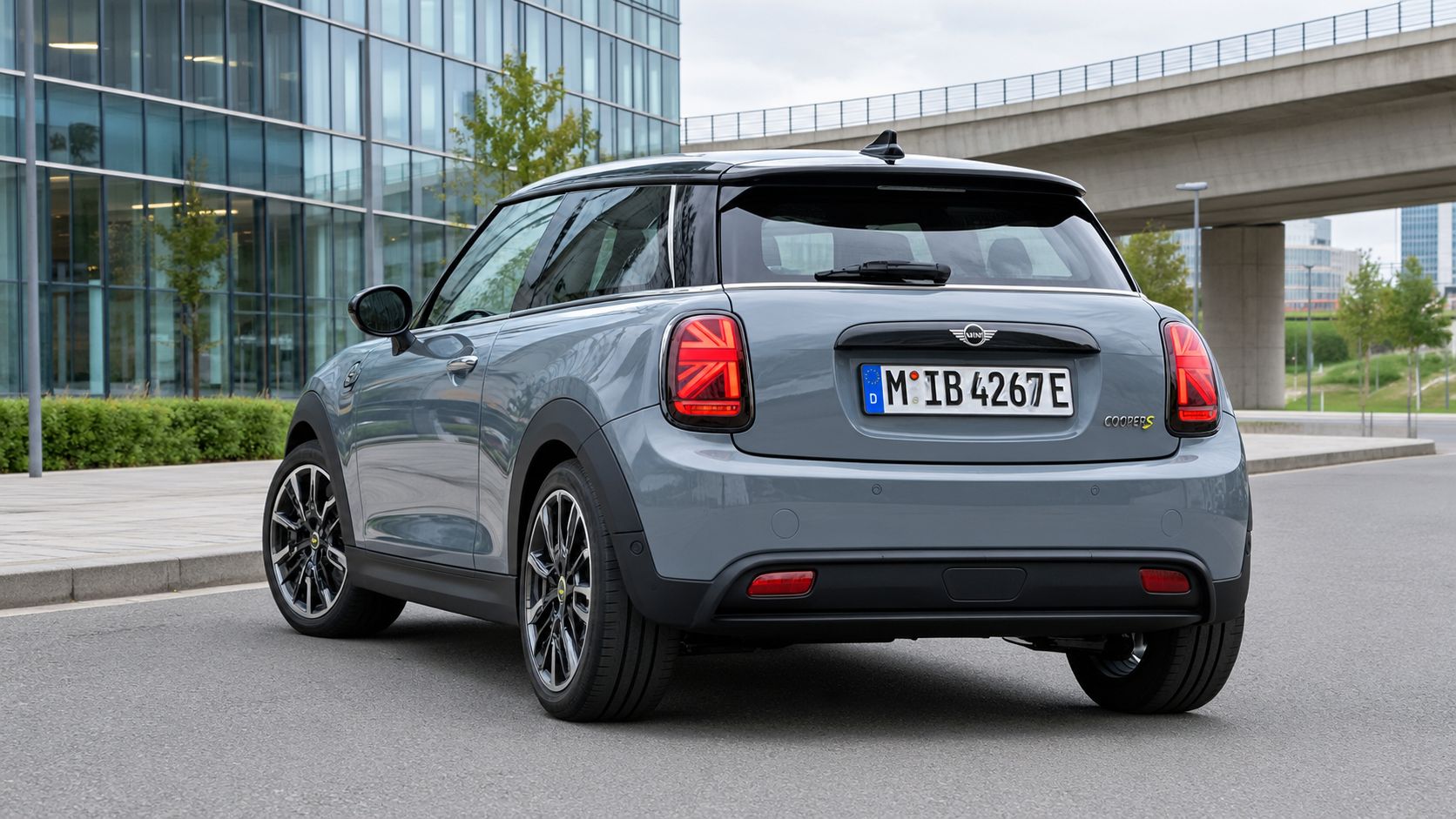
For a US-spec Tesla or another US-market EV, that can mean an adapter, hardware change, or charging-strategy adjustment. On top of that, Polish technical inspection still cares about ordinary import issues:
- Headlights must suit right-hand traffic in Europe.
- VIN plate details must match the documents.
- Homologation-related checks can trigger extra paperwork.
- Wydział Komunikacji will want the title, customs proof, tax proof where applicable, translations, inspection documents, and registration application set.
Shipping routes, ports, and delivery to your door
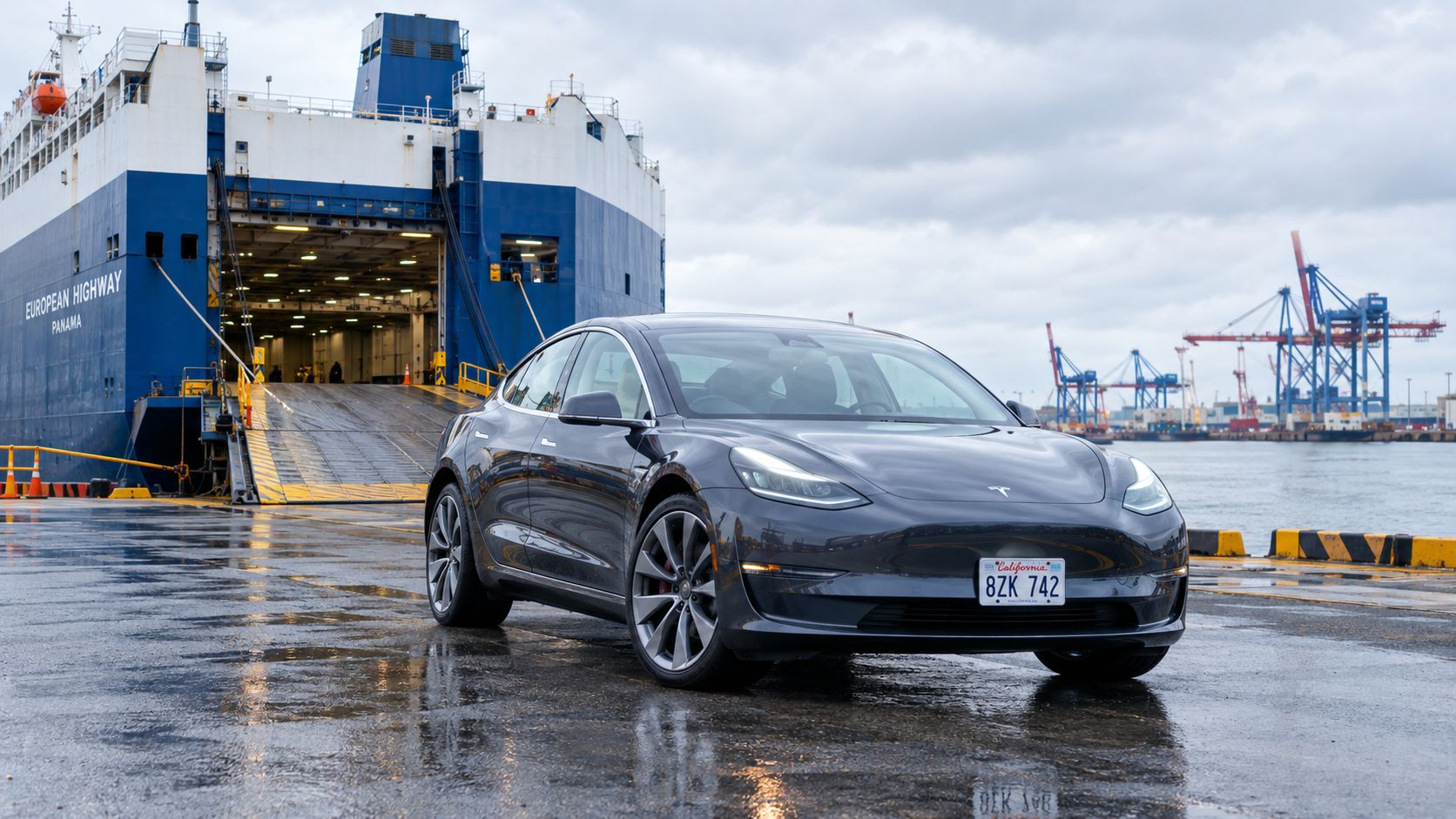
Two routes dominate the practical conversation for Polish buyers. One flows through Bremerhaven. The other ends in Gdynia.
Neither is universally better. Each solves a different problem.
Bremerhaven or Gdynia
Bremerhaven often makes sense when you want a dense shipping schedule and established EV-handling routines through a major German port chain. It can be attractive for buyers who value routing flexibility.
Gdynia can reduce the final inland leg inside Poland and may feel simpler for buyers who want the car to enter closer to home. In some cases, that means fewer moving parts after discharge.
If your customs representative isn't arranged before the vessel arrives, even a well-bought car can start generating storage stress.
Container or RoRo
This is the shipping choice that changes risk most clearly.
- RoRo suits drivable vehicles. It's usually the more straightforward route, but the car travels in a shared ship environment and you don't load extra parts with it.
- Container shipping suits non-running salvage EVs far better. It protects the vehicle more fully in transit and can work better when the car can't be rolled on and off.
For damaged electric cars, container transport often wins on control even when it isn't the lowest sticker price.
Last-mile delivery
After customs and release, the final leg to your address in Poland usually happens by flatbed or transporter. That matters more for EVs than many first-time buyers realize, because a salvage EV may still be non-drivable even after port release.
Typical door-to-door timing is often in the 21 to 35 days range in the scenario framing used for this route discussion. The pitfalls are rarely dramatic. They're administrative:
- Demurrage when paperwork lags
- Photo-only discharge reports that don't replace a real inspection
- Battery charge level issues if the car arrives with limited usable power
- Missed collection windows from port or bonded storage
Your first import checklist and how DreamBid helps
A disciplined buyer usually beats an impulsive buyer, even when both bid on the same platform.
Before you place any bid on an EV, run a fixed checklist. Don't improvise based on whether the photos look attractive.
The pre-bid checklist
- Decode the VIN and confirm the exact drivetrain, trim, and production year.
- Check title status and eliminate non-repairable paperwork unless you already know the registration path.
- Request battery health evidence where possible. State of health, visible range estimate, charge screenshots, or diagnostic snapshots all help.
- Inspect underbody and side-impact photos for pack-zone intrusion.
- Set a budget cap using a landed-cost model, not a bidding fantasy.
- Choose the shipping route before bidding so the logistics don't surprise you later.
- Plan Polish adaptation work such as charging compatibility and lighting.
Where tools make the process easier
You don't need a hundred apps. You need a few checks done properly.
- A cost calculator should estimate auction fees, transport, taxes, and local landing costs before you bid.
- A VIN history tool should surface older auction appearances and help catch story changes.
- A risk-ranking layer is useful when you're comparing several similar lots and trying to avoid the one with hidden structural trouble.
- Milestone photos from yard, port, and final delivery reduce the usual anxiety around cross-border movement.
One option in this category is DreamBid, which combines auction access, VIN analysis, cost calculation, and shipment-stage tracking in one workflow rather than splitting them across several vendors.
Buy the car only after you've priced the bad outcome, not only the optimistic one.
The mindset that saves money
The best EV importers aren't the ones who find the lowest bid. They're the ones who reject the wrong cars quickly.
If the listing hides the battery story, skip it. If the title is messy, skip it. If the car needs several assumptions to become a good deal, it probably isn't one.
Final verdict and frequently asked questions
Importing an EV from a US auction to Poland in 2026 can be a very sensible move when the battery has been checked properly and the buyer accepts that the car may be an older spec than the newest European showroom stock. It's a weaker fit for anyone who wants factory warranty simplicity, zero adaptation work, or the latest trim and software package.
The strongest buying chain is the one this market often separates by mistake. Battery health, EU battery compliance, and Polish tax treatment belong in one decision. If you split them, you can buy the right car for the wrong country.
Frequently asked questions
How can I test battery health before bidding
Use the evidence the listing gives you first. Look for dashboard range display, state-of-charge photos, charging status screens, and any diagnostic readout the seller provides. If history is available, compare mileage with visible battery behavior.
The broader comfort point is that real-world datasets show EV batteries usually age better than many buyers fear. Earlier in this guide, I cited the large multi-vehicle longevity findings rather than a one-car anecdote.
Can I charge a US-spec EV in Poland
Usually yes, but connector compatibility matters. Poland follows the common EU ecosystem built around CCS for DC fast charging and Type 2 for AC charging, so a US-spec car may need an adapter or hardware solution depending on brand and port configuration.
Public charging growth is real, but convenience still worries buyers more than raw charger counts. The IEA notes that by the end of 2025 there were more than 7 million public charging points globally, yet the EV-to-charger ratio is projected to rise from about 20 in 2025 to around 60 by 2035 in the IEA charging outlook. That's why I always tell buyers to plan home, apartment, or routine-route charging before they import.
What does a realistic all-in landed cost look like for a Tesla Model 3
For the worked example in this article, a 2022 Tesla Model 3 bought at $14,500 typically lands in a broader delivered band of €22,000 to €26,000 once logistics, VAT, documents, and fixed handling are included. A similar European market comparison often sits around €28,000 to €34,000.
The exact number depends on damage type, shipping route, and whether the car arrives as a simple cosmetic repair or a battery-risk project.
Are BEV imports fully legal for Polish registration
Yes, provided the car clears the standard import and registration chain correctly. The vehicle documentation, customs side, technical inspection, lighting adaptation where needed, VIN verification, and charging compatibility all need to line up.
From the tax side, BEVs are in the cleanest position because they're exempt from Polish excise under the framework cited earlier. From the EU side, battery labeling and compliance milestones also matter increasingly for newer market circulation.
If you want to compare an EV from Copart or IAAI with a car already advertised in Europe, start with the full landed-cost math before you bid. DreamBid lets you check auction history, estimate import costs, and follow the shipment from the US yard to Poland, which is exactly what matters when battery condition and registration details can change the whole deal.