



Blog
Hybrid Cars Explained Types Costs and Import to Poland
cars at live US auctions right now
Bid yourself or buy instantly — delivery and customs included in the calculator
More than 25.6 million passenger hybrid cars were sold worldwide between 2002 and 2020, with about 4 million sold in 2020 alone, according to a peer-reviewed market study (market study on global hybrid sales). Hybrid cars aren't an experimental bridge waiting for full electric vehicles to replace them. They've already become a mainstream powertrain, especially useful for buyers who need lower fuel consumption without depending entirely on public charging.
For a Polish buyer considering Copart or IAAI, the important question isn't limited to a hybrid's economy. You need to judge the powertrain, battery condition, auction damage, US-to-EU compliance work, VAT, customs, akcyza, repairs, and future resale value together. The right hybrid can be a sensible urban import. The wrong one can turn a seemingly attractive auction price into an expensive technical project.
Table of Contents
- Why hybrid cars became mainstream before you noticed
- How hybrid cars actually work and the three types to know
- Benefits and drawbacks by real driving profile
- Battery life repair and what replacement really costs
- Total cost of ownership in Poland and Europe
- Importing a hybrid from US auctions and what to watch for
- How to evaluate a hybrid purchase with DreamBid before you bid
Why hybrid cars became mainstream before you noticed
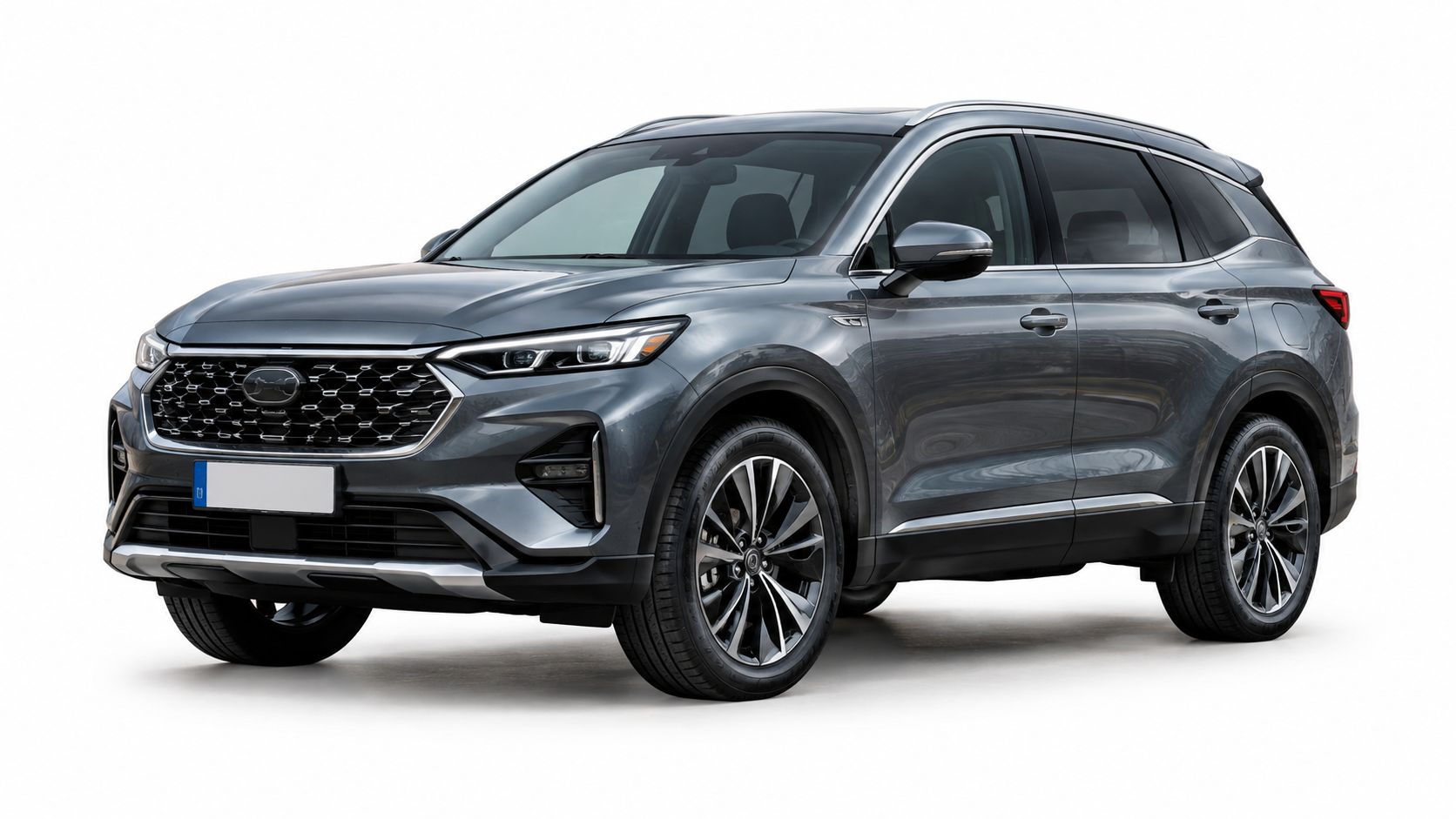
For a Polish importer, hybrid sales at global scale create a deeper pool of used parts, diagnostic knowledge, and repair experience. Annual hybrid sales rose from about 2.1 to 2.7 million units between 2016 and 2018, then exceeded 3.2 million in 2019 and 4 million in 2020. Hybrids represented about 5% of global new passenger-car sales in the earlier period and 7% in the later period, according to the global hybrid market study.
That scale changes the risk calculation at a US auction. Models sold in large numbers, including Toyota and Lexus hybrids, usually offer more workshop familiarity and a wider used-parts market than unusual electrified vehicles. A DreamBid buyer can therefore compare auction damage, service history, battery condition, and likely repairs against a larger body of practical experience.
The market accelerated further in the 2020s. One industry estimate places worldwide hybrid vehicle volume at about 16.27 million units in 2025, compared with roughly 8.4 million in 2020. The same source says electric vehicles and plug-in hybrids together grew from 4% of new-car sales in 2020 to 25% in 2025, with around 21 million new electric and hybrid cars sold globally in 2025 (global hybrid vehicle market estimate). Hybrids now belong to a broader change in vehicle technology, rather than a short-lived trend.
The Polish importer's advantage from global hybrid scale
European registration data shows how strongly buyers have adopted the technology. Hybrid-electric cars accounted for 34.5% of EU car sales in 2025, with 3,408,907 registrations from January through November 2025, according to the EU hybrid registration report. Spain, France, Germany, and Italy led that demand.
For Poland, the opportunity is access to US hybrid SUVs, sedans, and crossovers that may be less common locally. The final calculation must include transport, customs, VAT, akcyza, repairs, homologation, headlight adaptation, registration, and battery diagnostics. Engine capacity can also affect the akcyza threshold, so the model and specification matter before bidding.
A low auction price is only the first input. The practical question is whether the vehicle remains economical after EU compliance work and repair uncertainty. Copart or IAAI photos, lot details, vehicle history, and DreamBid cost calculations help establish that limit before you commit.
How hybrid cars actually work and the three types to know
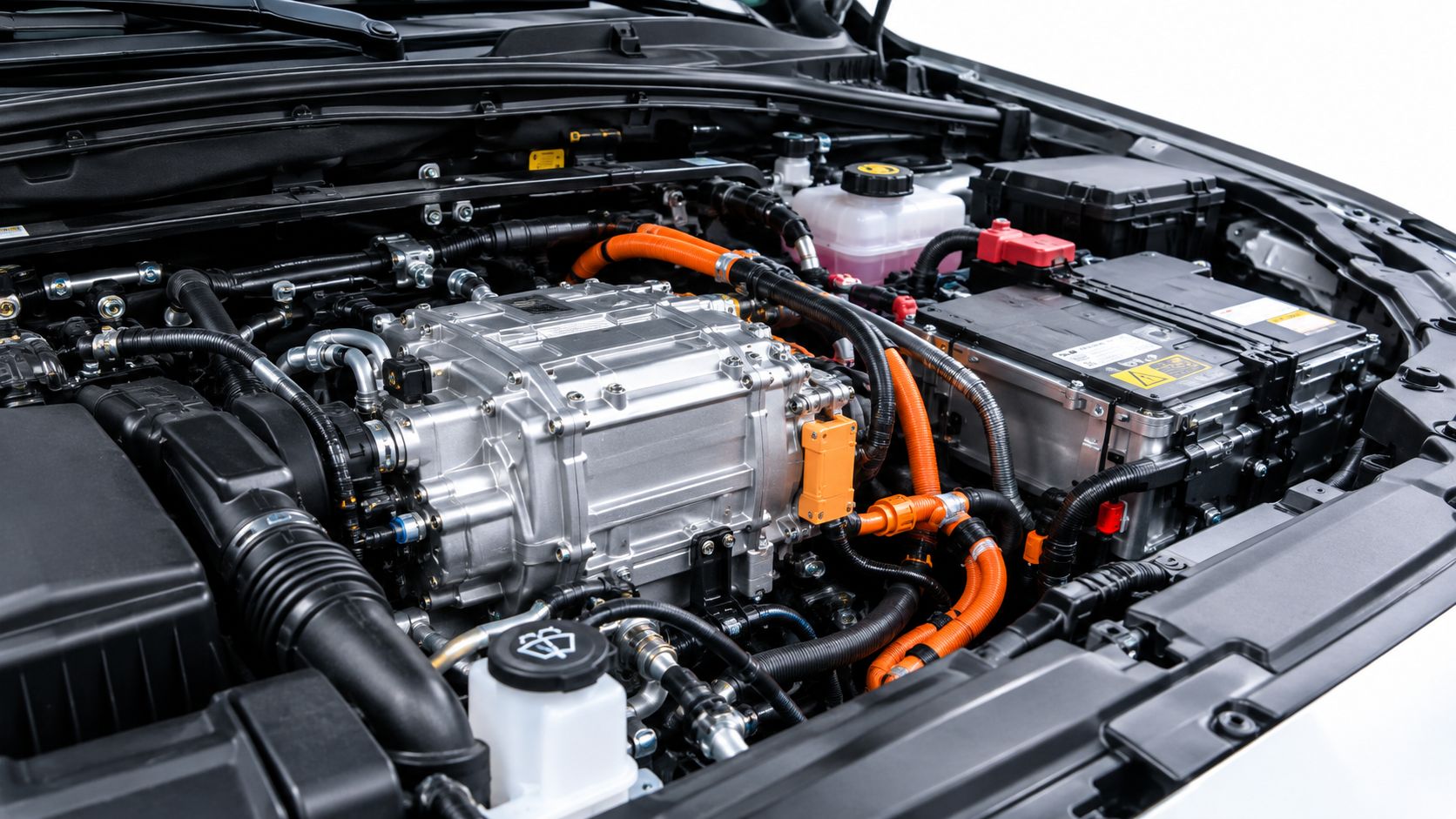
A hybrid combines an internal-combustion engine with an electric motor and a battery. The key idea is energy reuse. In a conventional car, braking turns much of the vehicle's motion into heat through the brake discs and pads. In a hybrid, the wheels can turn the electric motor into a generator, sending electricity back to the battery. This process is called regenerative braking (US Department of Energy explanation of hybrid operation).
The battery doesn't need to be enormous for this to help. The car repeatedly captures energy during deceleration, stores it, and uses it during launch or low-speed movement. A peer-reviewed study reported about 25.1% of energy regenerated during braking in one hybrid-energy-storage configuration (study of regenerative energy in hybrid vehicles).
Mild hybrids
A mild hybrid uses a relatively small electric system to support the combustion engine. It may assist acceleration, smooth stop-start operation, and recover energy while slowing down. It generally can't drive for meaningful distances using electric power alone.
This design suits drivers who want smoother urban operation without changing their habits. You don't usually need to plug it in, because the system charges through braking and the engine.
Full hybrids
A full hybrid can often move the vehicle electrically for short periods, especially at low speed and under light throttle. The engine, electric motor, and battery work together through software that decides when each source is most efficient.
Full hybrids are strongest in stop-start urban traffic. Frequent braking gives the car more opportunities to recover energy, while electric assistance reduces the load during launches. On a steady motorway journey, the advantage can narrow because there are fewer deceleration events to harvest.
Plug-in hybrids
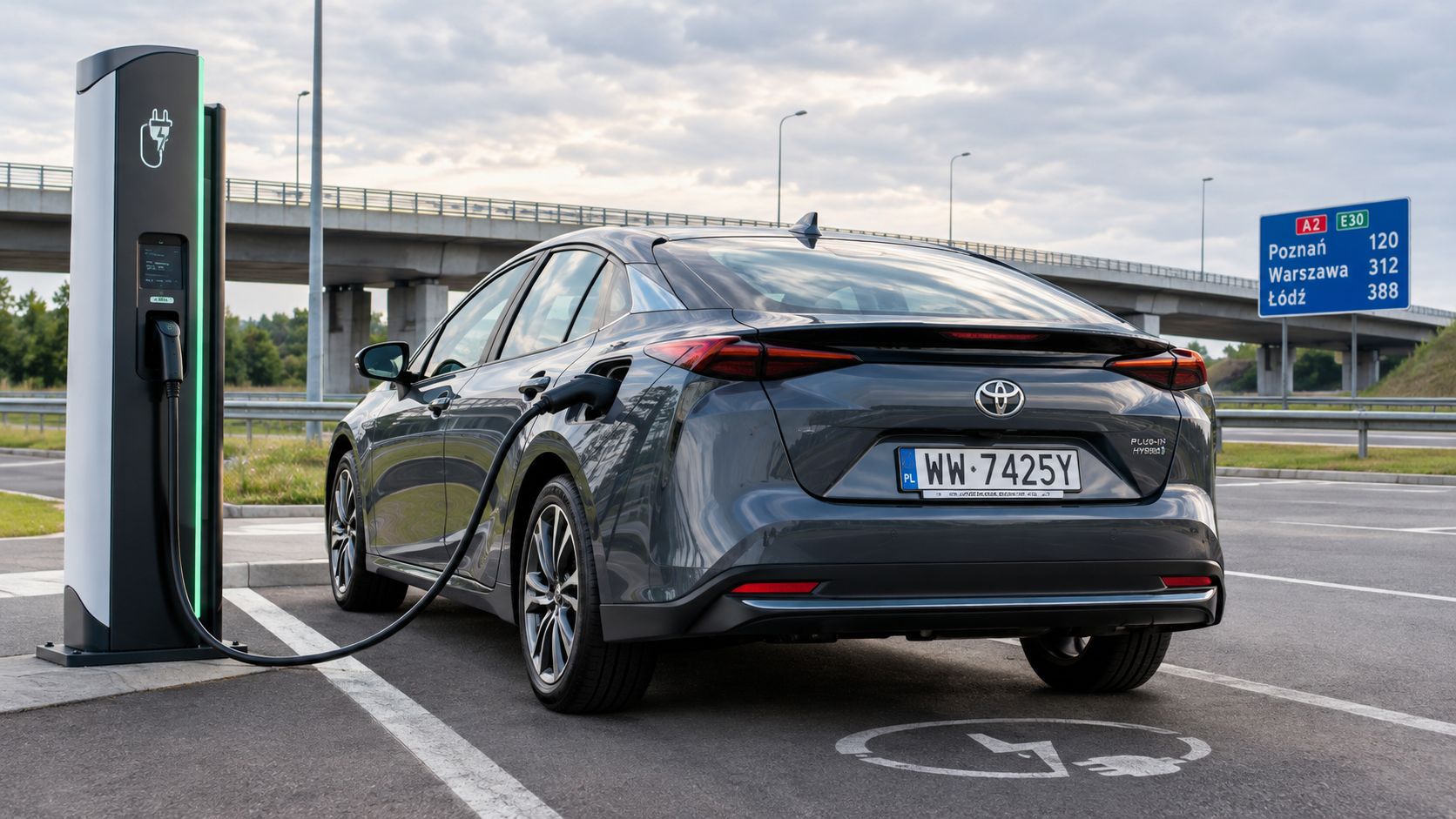
A plug-in hybrid, or PHEV, has a larger battery and can be charged from an external source. It can cover more daily driving electrically, but only if the owner charges it consistently. A PHEV used without charging may carry extra battery weight while operating much like a conventional hybrid.
Plug-in systems also age differently. Deeper cycling can reduce retained electric range faster than a conventional hybrid's fuel-economy benefit declines. Before buying an imported PHEV, ask how much electric range remains and what replacement path exists, not just whether the vehicle starts and drives.
For a model-specific check, a VIN resource such as Toyota Prius VIN check can help you organize the vehicle's identity and history before you spend time calculating the import. Buyers comparing hybrid and fully electric systems can also consult DreamBid's electric car guide.
Benefits and drawbacks by real driving profile
A hybrid isn't automatically the right choice for every driver. Its value depends on how often you slow down, whether you can charge, how long you keep the vehicle, and how much motorway work it does.
Urban drivers usually get the clearest benefit. Regenerative braking recovers energy that would otherwise become heat, and the electric motor can handle low-speed movement and initial acceleration. This makes a full hybrid particularly attractive for Warsaw traffic, short commutes, delivery work, and mixed city driving.
Highway drivers should be more cautious. Once speed is steady, the hybrid system has fewer chances to recover braking energy. A full hybrid can still offer smooth operation and efficient engine management, but the fuel-saving gap compared with a well-chosen petrol vehicle may be less compelling than it is in town.
Practical rule: Choose the powertrain for your actual weekly route, not for the most impressive specification on the auction listing.
Where the trade-offs appear
Hybrids add motors, power electronics, high-voltage cables, cooling systems, and battery control hardware. That complexity can deliver excellent urban efficiency, but it also means your inspection must go beyond the engine and transmission. A damaged battery enclosure, corroded connector, or poorly repaired high-voltage cable can change the economics completely.
Software matters too. In one simulation study, an optimized braking control approach improved recovery by 2.42% to 18.08% against one benchmark and 2.56% to 16.91% against another (regenerative-braking control study). The lesson for a buyer is simple. Similar hardware doesn't guarantee identical efficiency or battery stress.
| Hybrid type | City efficiency | Highway benefit | Charging requirement | Best for |
|---|---|---|---|---|
| Mild hybrid | Helpful support in stop-start traffic | Usually modest | No external charging | Drivers wanting smoother operation without charging |
| Full hybrid | Strongest fit for repeated braking and low-speed driving | Useful, but less pronounced at steady speed | No external charging | Urban and mixed-route drivers |
| Plug-in hybrid | Very strong when charged and used for short trips | Depends on charging access and journey length | Regular external charging is important | Drivers with predictable daily routes and home or workplace charging |
A PHEV can be a poor choice for someone who travels long distances and rarely charges. A full hybrid can be a better compromise for that driver, especially if most trips still include towns and junctions. Conversely, a city user with reliable charging may benefit from a PHEV's electric operation, provided the battery retains useful range.
Battery life repair and what replacement really costs
Battery condition is the central financial question in a used hybrid. Modern hybrid batteries often last 10 to 15 years or 150,000 to 200,000 miles, while some fleet analyses indicate that newer packs can retain most of their capacity beyond 150,000 miles (EPA hybrid and battery market document). Those figures describe broad expectations, not a promise for a particular auction car.
Age, heat, storage conditions, mileage, charging habits, accident damage, and cooling maintenance all matter. A vehicle that was lightly used but stored for long periods may deserve as much attention as a higher-mileage car that operated regularly and received proper service.
Conventional hybrids and PHEVs don't age identically
A conventional hybrid's battery may lose capacity gradually while the car continues to deliver useful fuel assistance. The owner might notice reduced efficiency or more frequent engine operation before seeing a complete failure.
A PHEV has a different ownership question. Deeper cycling can reduce electric-range retention faster than the fuel-economy benefit declines in a conventional hybrid. A buyer should therefore ask for remaining electric range, charging behavior, battery fault codes, and the manufacturer's replacement procedure.
The replacement cost can't be responsibly stated as one universal figure. It depends on model, battery chemistry, availability of new or remanufactured modules, labor, diagnostics, and whether the damage affects the enclosure or surrounding wiring. Build a repair reserve into the import calculation instead of treating the battery as a guaranteed lifetime component.
Warranty and auction inspection
Under US federal emissions rules, hybrid emissions components must be covered for at least 8 years or 100,000 miles. In California-mandated states, hybrid battery systems may require at least 10 years or 150,000 miles of warranty coverage (US hybrid warranty guidance). An imported car's original warranty status still needs confirmation by VIN, mileage, state, service records, and the European manufacturer's policy.
Ask for these checks before bidding:
- Battery scan: Read state-of-charge behavior, fault codes, cell balance, and available capacity with a compatible diagnostic system.
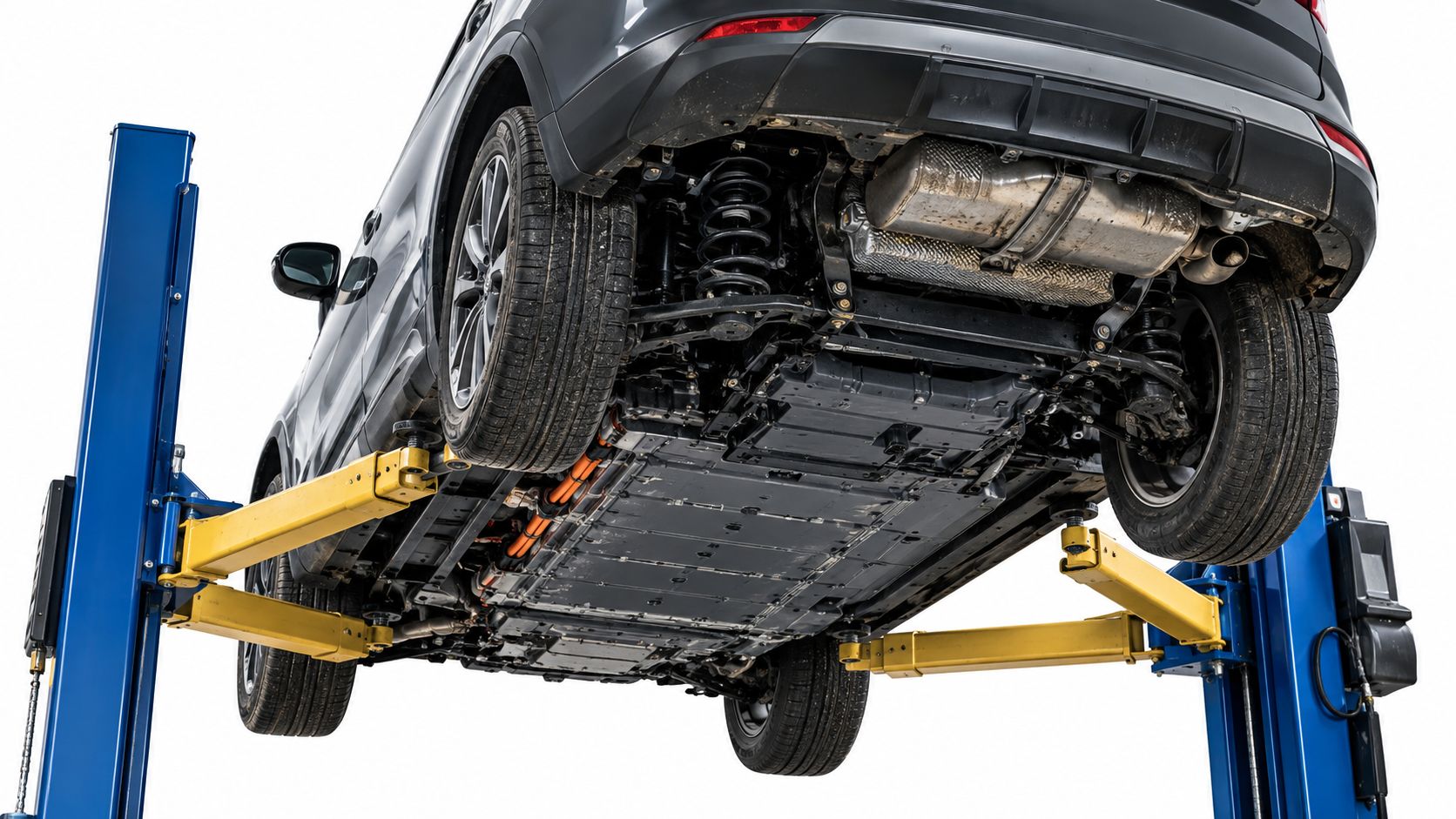
- Impact inspection: Look beneath the vehicle for crushed battery housings, damaged cables, or deformation near the pack.
- Water exposure check: Search for corrosion around connectors, under carpets, in the battery area, and inside control modules.
- Charging test: For a PHEV, confirm that the vehicle accepts a charge and that its displayed electric range behaves plausibly.
- Cooling system review: Inspect battery cooling ducts, fans, filters, and signs of contamination or blocked airflow.
A dashboard that displays “ready” doesn't prove the battery is healthy. It only shows that the car can complete its startup sequence at that moment.
Total cost of ownership in Poland and Europe
The purchase price is only the first line in a Polish hybrid import calculation. You need the auction charges, US inland transport, container freight, customs clearance, VAT, excise tax, repairs, technical inspection, registration, insurance, and any required conversion work.
A hybrid can reduce fuel use, but it may bring higher diagnostic complexity and a larger repair bill after an accident. An EV can avoid petrol consumption but requires dependable charging and a battery whose condition is equally important. A petrol car may be simpler to repair, yet its fuel expense can become more noticeable in urban use.
Polish tax treatment changes the comparison
Poland's 2026 ACEA tax summary lists a 50% excise duty reduction for HEVs. It also states that PHEVs with engines up to 2,000 cc are exempt from excise duty until the end of 2029 (ACEA 2026 tax benefits summary).
The same summary lists depreciation limits connected to CO2 bands, including PLN 150,000 for vehicles emitting below 50 g/km and PLN 100,000 for vehicles emitting 50 g/km or more. These rules can matter to business buyers, but you should verify the vehicle's exact classification and accounting treatment before relying on a tax outcome.
For a full import-cost framework, use DreamBid's total cost of importing a car guide rather than comparing the auction bid with a Polish showroom price.
Match the vehicle to the duty cycle
An urban driver can benefit from regenerative braking and electric assistance on repeated short journeys. A motorway-heavy driver may see less operational advantage, so the PHEV's charging discipline, engine size, and tax treatment become more important.
Insurance and financing also belong in the calculation. Before borrowing against an imported vehicle, review the wider question of whether car refinancing is worth it, including the vehicle's uncertain post-repair value.
The correct comparison isn't “hybrid versus petrol” in isolation. It's purchase cost plus taxes, repair exposure, energy use, service access, and resale risk over the period you expect to own the car.
Importing a hybrid from US auctions and what to watch for
The US-to-Poland process has several stages, and a hybrid adds high-voltage inspection to the normal import risks.
From auction lot to Polish delivery
- Select and bid: Review the Copart or IAAI listing, title status, VIN history, damage category, photos, mileage, keys, and declared run condition.
- Move the vehicle inland: After purchase, a transporter takes the car from the auction location to an export warehouse or port.
- Load the container: The vehicle is prepared for ocean freight. A damaged hybrid may require special handling if it can't roll, steer, or start safely.
- Clear customs: At the European entry point, the importer handles customs duty, VAT, documentation, and subsequent Polish excise obligations.
- Complete Polish preparation: Repairs, lighting conversion, technical inspection, registration documentation, and any required compliance work come before road use.
- Arrange final transport: A regional flatbed can deliver the completed vehicle to the client's address or move it to a repair facility.
Customs routing can change the practical workflow. Some importers compare clearance through German ports such as Bremerhaven for specific VAT structures with domestic clearance through Polish ports such as Gdynia. The correct route depends on the buyer's tax status, documents, and logistics plan, so it shouldn't be selected from a generic internet formula.
Damage that deserves extra suspicion
Salvage and clean titles aren't interchangeable. A salvage vehicle may be repairable, but its title history can affect registration, insurance, resale, and the evidence required by Polish authorities. Read the VIN history alongside the auction photos, not instead of them.
Look for:
- Structural movement: Uneven gaps, displaced suspension points, cracked windscreen edges, and wheel positions that don't match the body.
- Flood indicators: Mud, corrosion, water lines, damp insulation, oxidized connectors, and electrical faults are especially serious around high-voltage components.
- Battery-area impact: Damage underneath the cabin or rear floor can affect the pack even when exterior panels look repairable.
- Lighting compliance: US headlamps may require adaptation or replacement to meet EU standards, including beam pattern and marking requirements.
- Missing equipment: Chargers, battery covers, sensors, keys, and hybrid-specific cooling parts can add cost if absent.
A hybrid that runs at the auction may still have hidden electrical damage. Use a specialist inspection after arrival and don't treat a clean dashboard as proof of safe high-voltage operation. A dedicated guide to hybrid cars from the USA can help you review model-specific import considerations.
How to evaluate a hybrid purchase with DreamBid before you bid
A disciplined pre-bid review should end with a clear decision, not just an attractive auction number.
Start with the VIN. Decode the vehicle, compare the model and drivetrain with the listing, review its auction history, and check whether previous damage could involve the battery enclosure, inverter, charging equipment, or cooling system. DreamBid's VIN decoder is one tool that can support this first check.
Then enter the vehicle into the import calculator. Include the bid, auction fees, US inland transport, ocean freight, customs duty, VAT, Polish akcyza, repair work, lighting adaptation, inspection, registration, and final delivery. Calculate both a realistic repair path and a higher-risk scenario for missing parts or hidden electrical damage.
DreamBid combines online access to Copart and IAAI with VIN analysis, cost calculation, logistics coordination, and human import support. Its stated service model uses a fixed 1,999 PLN net fee, while shipment milestones include status updates and high-resolution photographs from export warehouses. The company operates with more than 10 years of import experience and thousands of processed vehicle transactions, claims that should still be considered alongside the specific evidence for your chosen lot.
Use the final go or no-go test:
- Battery evidence exists: Proceed only when the risk is understood.
- Damage is repairable: Separate cosmetic work from structural and high-voltage work.
- Taxes are calculated: Confirm engine displacement and applicable Polish rules.
- EU compliance is budgeted: Include headlights and registration requirements.
- Exit value makes sense: Consider resale with a US history and repaired title.
Use DreamBid to review a US hybrid's VIN, calculate the complete route to Poland, and compare the bid with taxes, repairs, shipping, and delivery before committing. If the numbers and battery risks still make sense after that review, you can bid with a much clearer understanding of what the vehicle will require.